
Brooklyn’s Coney Island is one the most enduring symbols of Americana and East Coast summertime fun. Long ago, the beachfront neighbourhood was something of an entertainment capital. That is why proponents of The Coney, a $3.4 billion mixed-use casino development, have adopted the slogan that Coney Island “just makes sense”.
Representatives from Thor Equities, Saratoga Casino Holdings, the Chickasaw Nation and other partners gave a detailed presentation of the proposal Wednesday. The project has begun the community advisory committee phase, which runs through 30 September at the latest.
The Coney is one of eight total bids in the running for three available downstate New York casino licences. It was believed that the Bronx proposal from Bally’s Corp was out of the running after losing a rezoning vote earlier this month, but New York City Mayor Eric Adams resurrected the project by vetoing that vote Wednesday. It will now return to the city council for another chance.
In order to advance, each project must receive a two-thirds majority approval from its local committee by 30 September. In The Coney’s case, that means four out of six CAC members. Votes are supposed to reflect the level of local support for the project, not members’ own beliefs.
At the meeting, NYC council member Justin Brannan was elected chairman. However, he wasn’t the one that project representatives ultimately had to reckon with.
Addressing Coney Island’s needs
In terms of aesthetic, the project is easily the most visually diverse of the field. Its bright neon colours and sweeping design curvatures mimic a theme park, as opposed to a glitzy skyscraper or posh resort. The renderings, although modern, look as if old-timey carnival organ tunes could be playing in the background, which is part of the allure of Coney Island.
If the bid is successful, construction of the project is proposed to start in June 2026 and finish by June 2029 for a single-phase opening.
In their presentation, stakeholders highlighted three key issues that the project will look to solve: making Coney Island a year-round destination rather than just a summer spot, ensuring public safety, and generating local jobs.
Peter McEneaney, executive vice president for Thor, leaned heavily on job creation. If approved, the project would generate 4,000 construction jobs and 4,500 permanent jobs, per the application materials.
“Coney Island today has a 17% unemployment rate,” McEneaney said. “Seventeen percent. That’s four times the national average. And how do you solve that? The way to solve that is to create a mixed-use project. This is not just a casino in a box. It’s a mixed-use entertainment project that fits in the framework of Coney Island.”
With regard to security, McEneaney announced that $75 million has been pledged toward first responders and emergency services in the casino’s first five years. This is in addition to a proposed $200 million community trust for local investments.
Casino manpower
Thor’s casino partners are Saratoga and the Chickasaws, through the tribe’s Global Gaming Solutions arm. The Chickasaws are one of three tribal partners in the New York race — Mohegan Gaming is Soloviev Group’s partner for Freedom Plaza in Manhattan, and the Seminole-owned Hard Rock is partnered with Steve Cohen for Metropolitan Park in Queens.
Paul Pippin, chief operating officer of Global Gaming Solutions, gave some background on the tribe, which operates WinStar World Casino in Oklahoma. WinStar is currently the largest casino by floor size in the world, with estimates ranging from 400,000-600,000 square feet.
“At GGS we don’t just build casinos,” Pippin said. “We build economies, and we build them for and with the people in those communities.”
Just got to Winstar World Casino
pic.twitter.com/smzI0LGMHU
— That Casino Life (@ThatCasinoLife) June 20, 2025
Also included in the bid is Legends Hospitality, the prominent entertainment and stadium ops firm co-founded by the New York Yankees and Dallas Cowboys. It would manage a year-round event schedule for a 2,400-seat venue at the site.
“The Coney is the largest private investment in south Brooklyn’s history,” Pippin said. “It’s 100% financed and it’s shovel ready. But it’s so much more than just a casino. That’s only a portion of what this entertainment project is going to bring.”
Community support
To help spearhead the project’s community outreach, the partners enlisted Robert Cornegy Jr, a former city council member. He previously represented the city’s 36th District in Brooklyn.
Cornegy said Wednesday that in the last three years, The Coney has held over 500 local meetings and garnered more than 600 letters of support. It has also received more than 10,000 local signatures, which he stressed were truly local and not from other areas of Brooklyn.
“For all intents and purposes, this is a community-backed proposal,” Cornegy told the committee. “I believe it’s a community-backed proposal.”
A history of Coney Island was given, from its earliest beginnings in the late 1800s to the present. Its peak popularity, according to the presentation, came in the 1930s. Then from the 1940s-1960s, it was a period of “peak Americana”. The 1970s began a period of “decline and disinventment”, which lasted well into the 21st century. Its current claim to fame is the nationally televised Nathan’s Hot Dog Eating Contest, held every 4 July.
The wrath of Solomon
One unique aspect of The Coney’s hearing was how lively the question-and-answer period was. There have been five presentations made to CACs so far, and for the others, there was very little committee feedback. But Wednesday, CAC member Marissa Solomon made her presence felt.
Solomon, who iGB incorrectly reported previously as being director of Pythia Public, is actually a local resident who does work for the Coney Island Museum. She has been a prominent voice in community hearings that were held previously, and she grilled officials again as part of the CAC.
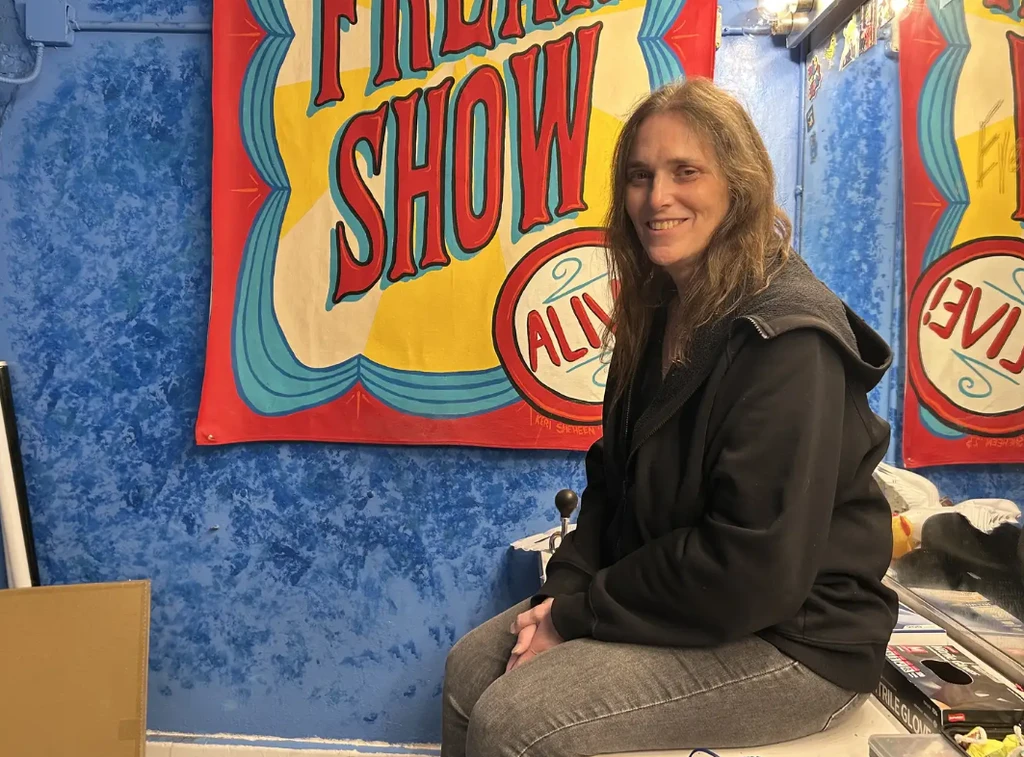
Her biggest gripe was in relation to the workforce commitment. While The Coney is advertising thousands of local jobs, it has said that only 9% would come directly from Coney Island. Solomon’s estimation was less than 200 jobs under that figure. She was also extremely wary of the partners’ diversity commitments and confronted the companies about their less-than-diverse executive staffs.
Representatives appeared to be caught by surprise by Solomon’s tenacity. They did not have prepared answers for her points, other than to say that the process is collaborative and could result in changes. The issues will almost surely be brought up again in the coming weeks, as each CAC must hold at least two public hearings before issuing a vote.
The Coney is the latest New York project to present its casino bid to an appointed local committee, although it received more pushback than others.