
A year of “strategic transformation, disciplined execution and renewed momentum” was how Better Collective co-CEO Jesper Søgaard described 2025 for the Danish affiliate in his shareholder letter as the firm posted its full-year earnings. Last year saw plenty of headwinds, including the impact of Brazilian regulation being a major thorn in the affiliate industry’s side. But, as Søgaard tells EGR, his team on the ground mitigated the situation, and the Latam giant is on course to get back to growth this year.
Speaking to EGR this morning, 26 February, Søgaard also dives into the firm’s AI plans, how prediction markets are continuing to shake up the market and why Genius Sports’ $1.2bn move for Legend is a validation of the affiliate space.
EGR: Underlying growth throughout Q4 and a nice share price tick up at around 5%. What are your initial thoughts?
Jesper Søgaard (JS): Q4 very much developed as we saw in Q3, with that underlying momentum in the business. Then on the back of 2025 being a transformational year – changing the way we set up the organisation and business, and have found efficiencies – we got to the highest EBITDA earnings ever for Better Collective. It was a very good ending to 2025 and set us up for a strong 2026 returning to growth, so very much as we planned and hoped.
EGR: Looking at Q4, how was the sports betting launch in Missouri given itwas first US state to go live since North Carolina?
JS: I would rate this as a regular state launch. It gave a nice push. Obviously, Missouri is not the biggest state in the US, and it also borders some existing regulated sport betting states. But, still, a nice push as always when we have these state launches.
EGR: Negative impact from Brazil shrank to €3m in Q4. Are you expecting to come back to growth in 2026, and is it a case of chipping away?
JS: We now have a new base in Brazil, and we’re working hard to grow from that. We are not expecting any sort of big leaps, but instead develop in line with the market and try and do it a bit better. Looking back at 2025, especially at the start when it was very uncertain and foggy on what to expect in Brazil, I’m really proud of how we manoeuvered the Brazilian regulation. We also guided very early in the year of what we expected, and it turned out that we did a bit better. The organisation and team; they’ve done an incredible job managing a difficult transition.

EGR: Prior to regulation, Brazil was expected to be the next big thing. But, the market hasn’t turned out to be as successful as everyone hoped.
JS: Obviously, the regulation is not ideal. There is leakage towards the unlicensed market. Unfortunately, a ban on sign-up bonuses definitely doesn’t help when consumers can go to the unlicensed market and find bonuses there. So, under those circumstances, I think we’re doing we’re doing a good job, but there are challenging market conditions in Brazil.
EGR: Another point from Q4 was all-time highs in value of deposits. What is driving this metric upwards?
JS: It’s a testament to the underlying quality of the databases we own and have generated over close to two decades. With the partners we have, strong brands and great products, the consumers are loyal to these products. I think that’s a testament to quality that it just continues to develop.
EGR: You’ve issued a positive outlook to 2026 while some listed gambling companies have been more conservative with their forecasts. Where is the confidence in the business?
JS: It’s across many parts of the business. In our publishing business, we’re seeing a very good development with our talent-led media. For the paid media business, again, strong underlying growth. It did very well despite the headwinds from Brazil and it’s on a great trajectory.
We have the World Cup this summer which will be a great boost to the entire business. And we have our core markets in Europe, North America and South America, and I would dub it the perfect World Cup for such market exposure. Normally, North America may not be as engaged [with the tournament], but being the host countries – in particular the US, the main host country with the most games – we expect a big interest and a lot of activity.
EGR: Is there anything Better Collective has to do differently when gearing up for these big tournaments?
JS: We have done this many times and have learned a lot over the years. We know we need to start planning early, prepare early, both on the entire editorial side and also on the commercial side.
We have had a lot of work streams going on to prepare for this. To some extent, that’s business as usual, but obviously we always add the learnings from previous tournaments.
EGR: BetMGM mentioned on their Q4 analyst call the rising cost of CPAs due to pressure from prediction markets in the US. What are you seeing on the ground?
JS: It is really driving different market dynamics. I sense very competitive tension but it’s still early days. In the US, they are still waiting for Polymarket to go fully live, and then many more players will come. It will be super competitive and affect the dynamics of the sports betting players, and that’s the environment where our business thrives. We really like competition and can work with all of these partners – we have a very big relevant audience for them.
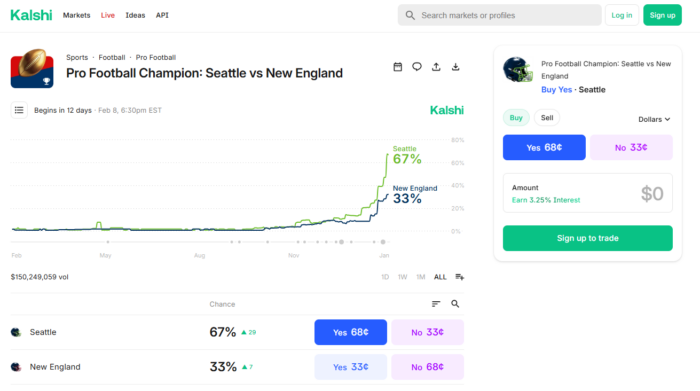
EGR: What makes prediction markets something you are happy to be involved with given the legality around them could end up in the Supreme Court?
JS: We take that into the perspective of how we allocate resources and investment. To be honest, my personal opinion is it’s starting to gain so much momentum I find it unlikely it will be completely rolled back. Where it is aligned with our business is that sports is a big part of prediction markets. Historically, elections have been very relevant content for us. So, for me, prediction markets are really aligning with the overall business we run.
EGR: What are your thoughts on Genius Sports buying Legend?
JS: We took note of that. From what I know, that must be the biggest transaction we have ever seen [in the space]. I think it’s a testament to the durability and the quality of our businesses. I welcome it.
I also noted Genius being vocal about the audience and the value of audience. We launched FanReach with that exact intent of monetising our audience, gaining data insights and being able to also sell that to a broader set of customers. Genius are very much validating the track we are already on.
EGR: In your shareholder letter you called AI a “defining force” for the affiliate industry. What does the future hold?
JS: We are embracing AI in so many different ways. I think the most concrete, external facing one is Playbook, our AI bot, which is making true aggregation possible in sports betting and allowing for much more convenience for the consumers.
It’s such a big unlock on the product side. Internally, the content production, it drives efficiency. You can simply do more with the same amount of resources. There’s a lot of opportunity and some threat and risk we need to manage. A key word here is adaptation. We just need to be ready to adapt because that is required in in the AI age, for sure.
EGR: Adapt or die, right?
JS: That’s a significant statement, but to be a winner, you have to be ready to do just that.
Have Your Say
Take our short customer survey on EGR’s content and data offering for the chance to win a £100 Amazon voucher. It will take less than three minutes, with the findings used to inform our plans to improve the platform
The post Q&A: Better Collective co-CEO on prediction markets driving “competitive tension” first appeared on EGR Intel.
Jesper Søgaard tells EGR how the disruptive vertical can bolster the affiliate in the US, while explaining why he welcomed Genius Sports’ acquisition of Legend
The post Q&A: Better Collective co-CEO on prediction markets driving “competitive tension” first appeared on EGR Intel.