
Duncan Garvie, BetBlocker founder

The black market will inflict increased damage on the regulated market
This year has seen the paralleled movement of many regulated markets towards stricter regulation of the industry and the increasing realisation within regulatory systems that the black market is undermining the efficacy of their regulation.
Short of a technological breakthrough that facilitates regulators effectively introducing friction between consumers and illegal gambling operators, each layer of additional friction consumers face when accessing the legal gambling ecosystem will act as a market force that will channel players to unregulated operators. I am sympathetic to the position that regulators find themselves in.
They are caught between appropriately and thoroughly regulating the market they are responsible for, and market forces that are effectively unique to the remote gambling sector that significantly erode the consumer protections that their efforts create.
They are trapped in a position where consumers are either failed by a lack of regulation or incentivised to migrate to the unlicensed market. Regulators have to be seen to robustly rule over their markets due to the harm that the product can cause. And there’s no question the pressure for further regulation will continue. But logically there will be a consequence to that action.
The UK will see a significant drop in the number of licensed gambling operators
The announcement of a significant increase of tax in the UK will inevitably result in a drop in the numbers of licensed businesses in the market. Markets are a notoriously complex and challenging ecosystem to predict. I don’t believe either side can accurately assert knowledge of what is going to happen as a result of this change. But it seems effectively inevitable that some businesses will find the reduced profit margins no longer represent a viable risk versus reward balance.
Raising the tax rate so sharply is, ironically, a gamble on the part of the government that the market can withstand this higher rate. Perhaps they are right and when some licensees leave the UK, their customers will migrate to other licensed operators, with the gross gaming revenue that the licensed market sees remaining stable.
Additionally, the industry might absorb the additional costs without passing them on to consumers in the form of lower return games or promotional incentives. That’s certainly to be the hoped for outcome. But there is a spectrum of other possible results that may see players migrate to the black market, and could result in a drop in gaming revenue, meaning that the higher duty doesn’t pull in the tax revenue expected.
The move towards a unified approach to the black market will begin
Up until now, every country has been trying to address the black market internally. And the results have been underwhelming to say the least. The fact that unlicensed operators can set up in jurisdictions where it’s very difficult to reach them via legal means makes disrupting their activities extremely challenging. Attributed to some of the smartest minds we have seen, the definition of insanity is doing the same thing again and again and expecting different results. Our isolated efforts to push back on the black market have not been successful and there’s a growing awareness of this.
It’s time for a unified approach from the regulated markets to challenge unlicensed gambling businesses. To pool resources and political clout to create pressure on the jurisdictions supporting these businesses. It’s unrealistic to expect a solution in 2026, but I do think we’ll start to see significant steps in this direction.
Robert Mabbett, Better Change engagement director
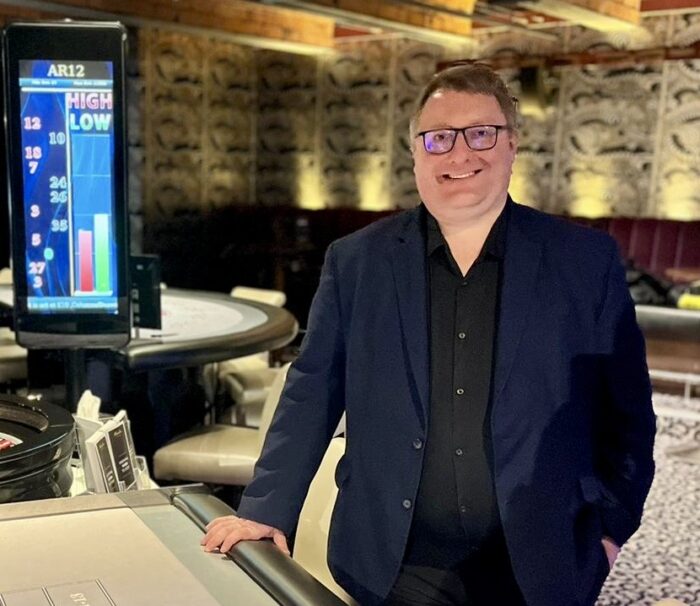
Necessity is the mother of creation
The introduction of the statutory levy for research, prevention and treatment as well as the announcement of huge tax increases in the Autumn Budget hit the industry hard in 2025. Despite the intense lobbying in the run up to the Budget claiming that a tax hike would cost jobs, close businesses and further fuel a growing illegal market, the decision to increase gaming duty from 21% to 40% was announced.
As a result, we are already seeing a reaction with re-structuring, high profile exits and potential sales among tier-one operators, but I do not believe that this winter of discontent will last and in 2026 I expect the industry to bounce back.
Sure, there will be interest in overseas markets as well as mergers and acquisitions but there always is in our world. I predict that the re-modelling and strategic planning going on behind closed doors will open the door to new products and innovative tech to engage with customers and streamline operations respectively, especially in AI automation where previous scepticism stalled progress.
New collaborations are formed…
It is in all of our benefit to get a grip on unregulated gambling and I predict that 2026 will see a concerted effort from government, regulators, operators, researchers, third-party providers and campaign groups to come together to tackle this growing issue. The first step to achieving this will be to try and understand the scale and depth of the issue. This is not simply a case of regulation stifling licensed companies creating an exodus of established players who are tempted by better offers and less friction in the black market, the problem is bigger than that.
With highly influential celebrities streaming content endorsing unregulated sites (including deep fakes), advertising on social media targeting vulnerable people in plain sight and unregulated real-money games dressed up as skill games, we are seeing a gateway into black market gambling that already attracts millions and has the potential to attract millions more putting the young and vulnerable at risk.
Some work is being done in silos, but it is my hope that 2026 sees this work joined up.
Old collaborations are broken…
The commissioning bodies for research, prevention and treatment appointed in 2025 have made one thing very clear ahead of the new system coming into effect in 2026, no industry allowed.
This shortsighted approach will see a great deal of knowledge and expertise lost from third sector organisations that are no longer viable in the new world and also from an industry that has worked collaboratively with lived experience and gambling support organisation over the past decade to increase its capacity and capability to tackle gambling-related harm.
This is not the industry’s loss, although they are now restricted as to who they can now work with as recipients of the levy cannot work with gambling companies, 2026 will see continued commitment to safer gambling and compliance because it is good business. No longer a tick box exercise, investment in these areas will need to deliver for operators which is a good thing as it will drive standards up. The levy, however, is taking services a huge step backwards which is a risk to those who need support.
The post Industry predictions for 2026: Statutory levy fallout and licensed operators flee the UK first appeared on EGR Intel.
BetBlocker founder Duncan Garvie and Better Change engagement director Rob Mabbett ponder how next year could shape up through a RET lens
The post Industry predictions for 2026: Statutory levy fallout and licensed operators flee the UK first appeared on EGR Intel.