
One of the main challenges of the market is that almost no one offers a rent-to-own model, and there is no option to buy a code.
For most game studios, entering the slot market is a slow burn. Months – often years – are spent building core technology, refining pipelines and shipping a first title that may or may not provide a foundation for what comes next. The period is costly and rich with frustrations, as founders, backers and the wider team seek to reach the market before the cash runs out. Even after launch, momentum can stall as teams struggle to repeat the process at speed.
The alternative approach is to treat scale not as a future ambition, but as a design principle from the outset – using platforms and tooling that allow multiple games to move from concept to market in parallel.
That philosophy sits at the heart of Kapara’s market entry. The B2B iGaming content provider launched its business without prior in-house slot development experience, yet within months was able to demonstrate a growing, production-ready portfolio thanks to Digicode. That progress was accelerated by building its games on Digicode’s DigerRGS platform, which provides the tools required to bring premium content to market quickly.
Powering performance with DigerRGS
All Kapara titles are deployed via the DigerRGS platform, Digicode’s cloud-native remote gaming server. The platform combines game engines, certified RNGs, reward systems, analytics and integration tools into a single, scalable infrastructure.
Performance is a central focus. DigerRGS is designed to support tens of millions of spins per day, ensuring consistent gameplay across desktop and mobile environments.
“We’ve tested the platform extensively,” says Igor Zhalii, senior product manager at Digicode. “Scalability is not a concern. You can grow without worrying that the technology will become a bottleneck.”
Beyond performance, DigerRGS offers a rent-to-own model that gives studios full ownership of platform code and intellectual property. That approach allows providers like Kapara to innovate independently, without being constrained by shared systems or ongoing royalties.
“They can take the code and do whatever they want with it,” he says. “That freedom is incredibly powerful for studios with long-term ambitions.”
Kapara’s ambition fits neatly with the rationale behind Digicode’s advanced platform. The key, according to his words, was avoiding the temptation to start small and instead committing early to a long-term roadmap.
“Kapara didn’t want to build just one game and then see what happens,” he explains. “From the beginning, the idea was to think like a real content studio – to plan a portfolio, not a single release.”
Building a roadmap, not a flagship
Before working with Digicode, Kapara had relied on external studios to supply a range of prime slot games. The decision to become a game provider itself was about gaining control – over product direction, development speed and long-term differentiation. Digicode’s role was to provide the technological and operational backbone to their client to make that transition viable.
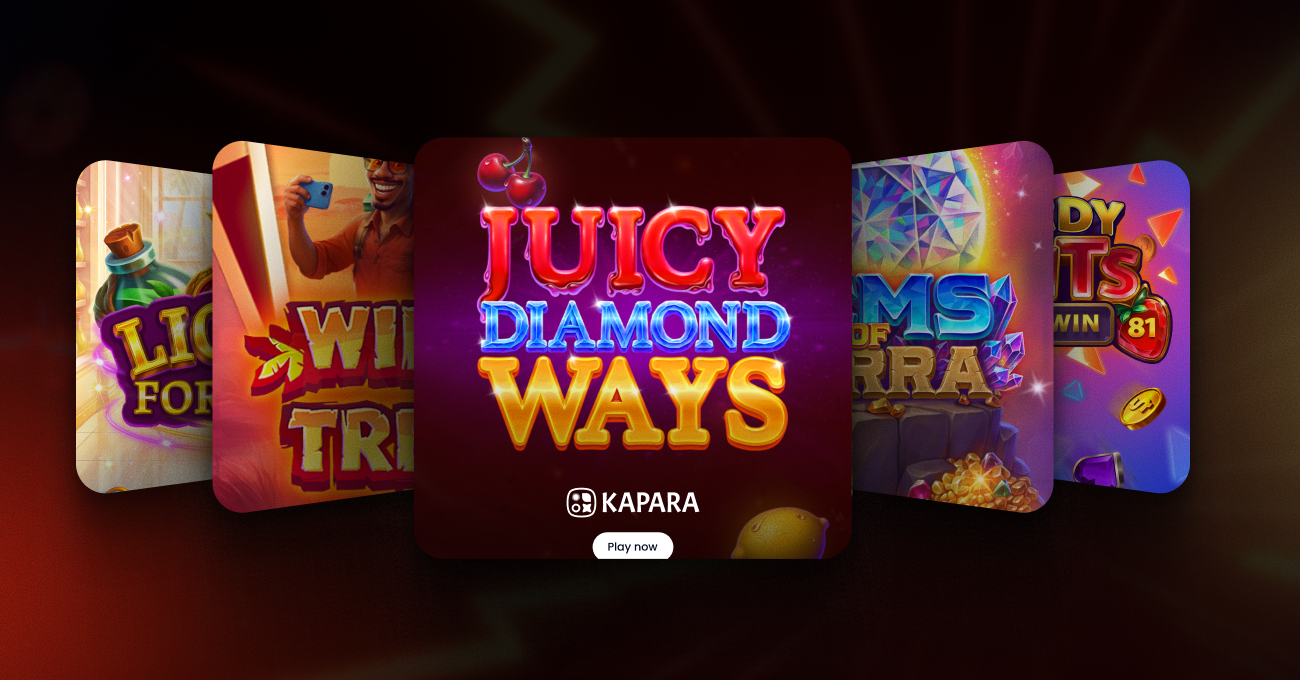
Rather than starting with a single flagship title, Kapara defined a 20-game roadmap at the point of market entry. Production began with two games developed in parallel by a small, focused team. Once the first results were visible, development scaled rapidly.
While Digicode’s platform provided the technical foundation, their experienced team was on hand to support Kapara at every stage of development.
“We started with two games to prove the process,” Zhalii shares. “After the first game was shown, Kapara saw how smoothly everything was going. At that point, scaling became a logical next step, not a risk.”
Within a short period, Kapara expanded to nine games in active development, each at a different production stage. Three completed titles were prepared for industry showcasing within the first six months, demonstrating both technical readiness and commercial intent.
“That acceleration was possible because the pipeline was already there,” Zhalii adds. “We weren’t inventing everything from scratch every time.”
The Digicode approach: modular by design
At the core of Kapara’s development model sits Digicode’s proprietary, modular game engine. The philosophy behind the technology is simple: remove unnecessary reinvention and let teams focus on creative execution.
“Most studios lose one or even two years just building the core platform before they can really start making games,” Zhalii says. “Our solution [for our clients] gives that core from day one.”
Instead of writing game logic, server protocols and tools repeatedly, developers work with a ready-made game development kit covering both server and client. Visual scene-building tools allow designers to assemble game environments without heavy coding, while established backend services handle RNGs, math engines, reward systems and analytics.
“The developers don’t develop the game from scratch,” Zhalii explains. “They use the tools, the engines and the graphical scene editors we already have. That alone saves an enormous amount of time.”
As a result, full game development cycles can be reduced down to three months, depending on complexity. Simpler titles or reskins (where assets are refreshed but the underlying mechanics remain consistent) can be delivered even faster, and if some assets may be reused (e.g. symbols, reels, or characters), the pace grows respectively.
Scaling without sacrificing quality
Rapid expansion often raises concerns about stability and consistency. In Kapara’s case, the modular structure was specifically designed to avoid those pitfalls.
“When you scale artists, the development team doesn’t need to scale at the same rate,” Zhalii says. “The platform does a lot of the heavy lifting. That’s how you increase speed without losing quality.”
Digicode’s production model emphasises predictable pipelines and repeatable processes for their clients. Proven mechanics such as Free Spins, Hold & Win, Bonus Buy, Mystery Symbols, jackpots, autoplay and quick spins options are implemented as reusable modules, ensuring consistency across titles while still allowing for creative variation.
Kapara has also committed to predictable quarterly release cycles, reinforcing its position from the start as a reliable content supplier rather than a studio dependent on sporadic launches.
“This is portfolio-level thinking,” Zhalii notes. “You’re not asking whether one game will succeed. You’re building a system that can deliver again and again.”
Balancing familiarity and innovation
While speed and scalability are central, commercial performance ultimately depends on player appeal. Kapara’s games intentionally lean on well-known slot mechanics, but with careful attention paid to presentation, math and feel.
“Kapara and Digicode are not trying to reinvent the wheel,” Zhalii says. “The market already knows what players like.”
Innovation instead comes through execution. Digicode’s teams closely track industry trends to analyse emerging mechanics and presentation styles. Visual quality is treated as a priority, with modern animation techniques and high-end art used to refresh familiar formats.
“The way the math is built is also critical,” he explains. “That’s what defines how engaging the game feels and whether players want to keep playing.”
Behind the scenes, the client-side core ensures smooth transitions between game states, helping players feel immersed rather than mechanically driven from spin to spin.
“When everything feels natural, the player becomes part of the game world,” Zhalii adds. “Not just someone clicking a button.”
Deployment-level flexibility
One of the defining characteristics of titles built on the Digicode platform is that they are configurable at deployment, rather than requiring rebuilds for each market. Clients such as Kapara are assured that visual themes, pacing, currencies and regulatory parameters can all be adjusted without altering core logic.
“For operators, that flexibility is huge,” Zhalii says. “You don’t want to rebuild a game every time you enter a new jurisdiction.”
Digicode draws on almost 20 years of experience working across regulated markets, ensuring that games are designed from the outset with compliance in mind. Tooling and back-office controls support requirements from major regulators, allowing studios to adapt quickly as rules evolve.
“When you build the game, you already know you have everything you need for future regulation,” Zhalii explains. “That confidence changes how you plan.”
Looking beyond online slots
Kapara’s games are also designed for cross-vertical deployment, with the ability to adapt titles for land-based casinos or sweepstakes environments. That versatility reflects wider industry trends, as operators seek content that can move across channels and devices.
“We don’t tie games to specific buttons or screens,” Zhalii shares. “The mechanics can be mapped to whatever interface is needed.”
The same underlying technology can support other verticals too, from table games to lotteries, reinforcing the idea that modular platforms offer resilience in an evolving market.
“It’s about being ready for whatever device or format comes next,” he says. “If the demand is there, the technology can follow.”
Designing for sustainable growth
Kapara’s early progress illustrates what can be achieved when scale is treated as a starting point rather than an end goal. By committing to a roadmap-driven strategy and leveraging Digicode’s modular technology and DigerRGS platform, the studio has positioned itself to deliver prime slot games and progressive slot games at a pace that would traditionally require far larger teams.
For Zhalii, the lesson is clear. “If you want to grow, you need systems that support growth,” he says. “Kapara understood that from the beginning – and that’s why the results came so quickly.”

Igor Zhalii, senior product manager at Digicode
Launching a new slot studio is rarely quick or predictable. Igor Zhalii, senior product manager at Digicode, explains how their client, B2B gaming provider Kapara avoided the usual bottlenecks by building for scale from day one, using Digicode’s modular technology and DigerRGS platform to accelerate time-to-market without sacrificing quality.