
After months of preparation, 14 November 2025 marked a watershed moment in the Italian gambling landscape. New licences issued by Italy’s Customs and Monopolies Agency (ADM) came into effect, kicking off a new gaming era in the country. This represented the most significant regulatory change in Italian gambling since 2006, when the government passed the Barsani Decree legalising online gambling and allowing overseas operators to enter the market.
The changes to Italy’s gambling regulations were substantial, as the government looked to reduce the number of companies operating in what was a saturated market. The licence fee shot up from €200,000 to €7m, with a licence valid for up to nine years. Each operator was permitted to apply for a maximum of five licences, with each individual brand requiring its own licence.
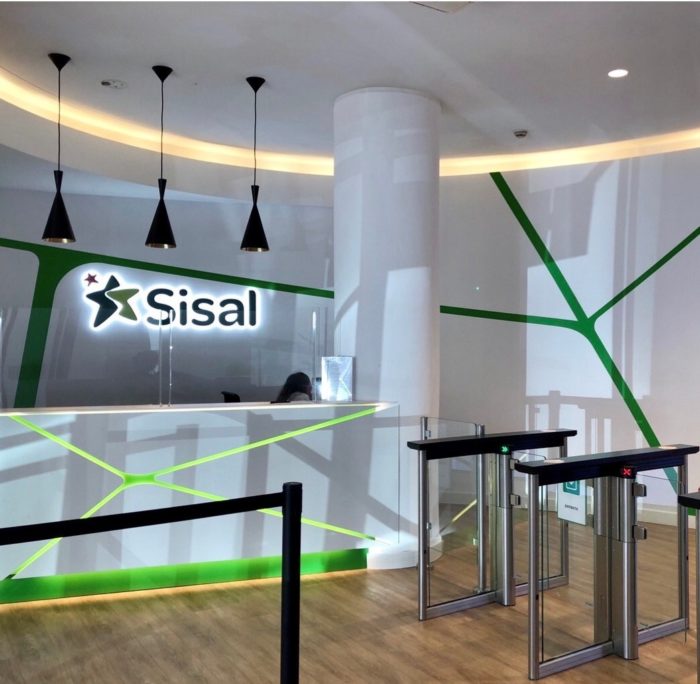
For example, Flutter applied for the maximum number of licences to accommodate its Sisal, Snaitech and PokerStars brands. In total, 46 operators have been granted 52 licences by the ADM, down from the 91 licensees live under the previous regime.
The one-domain-per-licence rule has also led to the elimination of ‘skins’ in Italy, serving to further streamline the market by cutting approximately 350 white-label websites. The ADM has also put a greater emphasis on introducing mandatory responsible gambling measures into the market; these include deposit limits, automated alerts to flag harmful betting behaviour, two-factor authentication for player accounts and the ability for customers to self-exclude.
Operators have been granted a six-month transition period to become fully compliant. Both the ADM and Italy’s Ministry of Economy (MEF) are confident the new system will generate €364m in revenue from licence fees alone, with the market forecast to generate €5.5bn by the end of 2026.
Running start
Judging by the market performance in 2025, using data provided by Italian publication AgiproNews, the major players will take some displacing. In terms of revenue for online sports betting, Lottomatica- and Flutter-associated brands accounted for five of the top 10 best performing operators – GoldBet, BetFlag and Planetwin365 on the Lottomatica side, with Flutter represented by Sisal and Snaitech.
GoldBet led the way with gross gaming revenue (GGR) of €294.8m with a market share of 18.9%. Sisal (16.9% market share) and Snaitech (10.7% market share) followed with GGR of €263.4m and €166.3m, respectively. Bet365 wielded a 10.6% market share and had GGR of €165m, while Entain-owned Eurobet rounded out the top five with GGR of €155m and a 9.9% market share.
When looking at online casino, Lottomatica and Flutter continued to dominate, with GoldBet, Sisal and BetFlag in the podium positions. Eurobet and evoke’s 888 brand featured in the top five for both GGR and market share, with Betsson and Flutter’s PokerStars the only differentials from the sports betting list.

One operator looking to make a splash in Italy’s new-look gambling market is Stake. The crypto-first firm prepared for its Italian debut via its acquisition of Idealbet parent company Baldo Line, completed in August 2024. The brand, which will operate under the Stake.it domain, will be one of the smaller licensed companies in the market.
“During this year, we prepared all the activities for Stake.it – new agreements, new contracts with the providers, and everything,” explains Fabio Bufalini, Stake’s Italy country manager. “Of course, we had Idealbet, which made it much easier to establish all the operations.” After integrating more casino suppliers in order to get up to speed with other operators in the market, the next phase of Stake’s strategy will look to put down firm roots in Italian soil.
“Now we are going to open the market, mainly with affiliates at the beginning,” Bufalini elaborates. “Then we will start developing activities to build the brand across the entire market. Product first, and then we’ll make the right investment to build the brand.”
Davide versus Goliath
With fewer companies in play, the disparity between the small and large operators in the market is inherently lessened. The enhanced licence fee was the first litmus test to see which companies had the stomach for the market. Bufalini adds: “The new tender was not for everybody – so many little operators are disappearing right now. They cannot afford it anymore. As a bigger operator, we want to be protected for the investment we are making.”
Christian Tiribassi, senior partner at gaming advisory firm Ficom Leisure, suggests that despite larger operators being able to absorb heftier costs in the short term, the market could level out in the long run once every company has had the chance to settle in.
He says: “Larger operators benefit from greater resources, brand recognition and the ability to absorb regulatory costs. The true impact will become clearer over time as all participants adapt to the new environment. M&A has also been a function of the mix between a normal industrial consolidation process and an acceleration related to the new licensing process.”
Stefano Sbordoni, founder of law firm Sbordoni & Partners, warns that extensive forward planning will be key to the success of new operators joining the market. “One of the most challenging aspects of the new regulatory framework will be the implementation of the nine-year investment plan required under the concession,” he says.
“Licensees are subject to extensive and ongoing reporting obligations and are required to make continuous investments in responsible gambling initiatives, security systems and technological infrastructure. Ensuring full compliance with these requirements over such a long period represents a significant operational and financial challenge, particularly in a highly regulated and competitive market.”
Maintaining dignity
One aspect Italy’s new market framework didn’t address was advertising restrictions. The Dignity Decree, in place since 2018, prohibits gambling advertising across traditional outlets and social media platforms, in addition to curbing any gambling-related sponsorships. While market newcomers may have hoped the new tender would create some leeway, the restrictions will remain in place for the time being.
Operators have previously found a workaround, using different, gambling-adjacent parts of the business for sponsorship purposes. Betsson Group’s infotainment news site Betsson.sport’s front-of-shirt sponsorship deal with Italian football giants Inter Milan is one example that has allowed the Swedish firm to skirt the gambling ban, but ensure its brand remains front of mind. Tiribassi points out that operators will have to get creative to establish brand presence within the market.
He says: “Optimising digital presence – through SEO, responsible gaming messaging and customer experience – will be essential. Building strong relationships with affiliates and leveraging data-driven, personalised communication within regulatory boundaries can help maintain brand visibility and customer loyalty.”
Bufalini maintains that Stake may be better off taking a wait-and-see approach to marketing in Italy, unable to capitalise on strategies that have worked in other markets for the crypto-first giant. “There are still opportunities for a new brand like ours to start and promote the brand in a good way,” he says. “Stake is quite famous globally for big sponsorships like Formula 1, Everton and so on. Right now, we are not starting to do anything like that in Italy. We want to see how the market is going.”
Sbordoni suggests operators could try to use the meticulous planning of the licence application to their advantage. He adds: “The new regulatory framework requires licensees to implement a structured nine-year investment plan, in which responsible gambling initiatives, including related communication activities, represent a mandatory component. This creates an opportunity for operators to communicate their brand values, strengthen player trust and differentiate themselves within the boundaries of the regulatory system.”
Such restrictions place the onus on regulators to keep a lid on the rise of black market operators, who aren’t bound by the same shackles as licence holders. A 2023 report from Italian newspaper La Gazzetta dello Sport estimated €25bn is bet per year illegally. The European Gaming and Betting Association said that, based on this figure, nearly €1bn in GGR is lost to the black market annually.
While the reduction in the number of operators may be “a good step”, Bufalini attests that “something has to change in order to avoid growing the black market in the next few years”.
The post Tutto cambia: shining a spotlight on Italy’s revamped regulatory framework first appeared on EGR Intel.
With Italy’s Customs and Monopolies Agency recently launching a more streamlined version of the country’s online gambling regime, what can prospective operators expect from Europe’s second largest betting
and gaming market?
The post Tutto cambia: shining a spotlight on Italy’s revamped regulatory framework first appeared on EGR Intel.