
Macau’s mandated transition to a genuine Las Vegas of Asia, a broad-based travel and leisure destination where gaming is one of several main revenue streams, faces three major challenges. Overcoming a fourth challenge would greatly facilitate addressing the first three.
Mastering this transition matters because Macau’s six casino operators must spend US$13.6 billion on non-gaming projects and explore overseas markets under their concession agreements running through 2032.
Meanwhile, Macau gaming revenue and concessionaire profits remain stubbornly below 2019 levels, before Covid and the severe constriction of junket promoters that once provided two-thirds of gross gaming revenue. Through November, Macau’s gross gaming revenue lags 2019 by 16%, a $5.4 billion shortfall.
Mass market hysteria
The revenue decrease comes despite Macau’s visitor arrivals tracking close to 2019’s record 39.4 million. “The high-spending VIP clients have largely disappeared and have been replaced by mass market visitors who spend more conservatively,” Andy Choy, a longtime Macau gaming executive, says.
“EBITDA margins have narrowed due to elevated reinvestment costs, promotional spending and a shift toward mass market play. While mass gaming yields higher margins than VIP historically, the erosion of consumer quality and increased competition among concessionaires have diluted profitability,” Platinum Strategic Consulting Group managing director Mary Mendoza says. “Structural recalibration, not just cyclical rebound, is needed.”
“Las Vegas provides a great template,” Choy says. “Gaming once dominated a casino’s revenues but now accounts for less than a third, with entertainment, food and beverage and other non-gaming revenues making up an increasing share.”
Macau “is not Las Vegas, nor will it be,” Seaport Research senior analyst Vitaly Umansky says. At least for now, he’s right.
Reason #1 Macau is not Las Vegas: Macau integrated resorts overwhelmingly rely on gaming, specifically premium player gaming
Sands China, Macau’s most diversified operator, derived 20% of Q3 property revenue from non-gaming; in 2019 Q3, the figure was 17%. Industry sources indicate premium gaming currently produces more than 70% of EBITDA.
“I think the Macau market is being driven at the moment by probably fewer than 1,000 players. The amounts they bet are eye-popping. I saw one guy this week at MGM betting one million [Hong Kong dollars; $128,500] a hand while moving from table to table in the high-limit area,” Intelligence Macau managing director Anthony Lawrance says. “Essentially, no one believes in the wider mass market anymore, and why should they when these kinds of players exist?”
MGM China CEO Kenneth Feng suggests a key impediment to Macau achieving Las Vegas-level non-gaming numbers is China’s per capita GDP remaining well below that of the US, about one-sixth as large in raw terms with one-third the purchasing power.
Moreover, the post-Covid economy has been tough for China and its neighbours. “It’s hard to ignore global geopolitical uncertainty,” Choy, with executive experience spanning three continents, says. “With several ongoing military conflicts and the trade war between China and the US, it’s natural for discretionary consumer spending to decline.”
Shrunken universe
Those factors leave a relatively small universe of Chinese non-gaming customers that can afford a Macau vacation. And if they can afford Macau, Umansky says, they can also afford “Tokyo, Bangkok, Europe, Australia, Hong Kong. If you’re not gambling, what’s the draw? Shopping? If you go to Shanghai, there’s everything that exists in Dallas. This isn’t China 30 years ago.”
The focus on high-end players, premium mass and direct VIP has spurred what Umansky dubs “the premiumisation of Macau”. Cotai has become perhaps the most concentrated collection of luxury hospitality on earth.
Sands China remade Sands Cotai Central into the Londoner with three themed hotels, all significant upgrades from the previous components. They sit alongside a St Regis and across the street from a Four Seasons with an added stable of top-end suites that’s adjacent to Venetian. The latest conversion, Londoner Grand, occupying what was the world’s largest Sheraton, has 1,500 suites among 2,400 keys and Hampton Court, elevating the hotel buffet experience with British palace design and extensive non-British cuisine.
Londoner Grand’s deep blue colour scheme is nearly identical to Raffles’ signature shade. Entering Raffles’ gold-sheathed 450-suite tower at Galaxy Macau reveals an elegant haven of commissioned artworks, a nearly five-ton crystal chandelier and baby grand piano. In August, Galaxy added Capella, featuring 95 penthouses and suites, each with “cultural authenticity”, private plunge pools and, as at Raffles, 24-hour butler service.
Morpheus meets Morocco
Melco opened a 557-room W as part of its Studio City second phase designed by Zaha Hadid Architects, creators of the ingenious Morpheus at its flagship City of Dreams. MGM China – the only concessionaire showing consistently higher post-Covid EBITDA – built 28 “contemporary Chinese design” Emerald Villas at MGM Cotai (then 28 Alpha Villas and Alpha Club gaming on the peninsula). It’s also building 60 suites in Cotai, which already hosts MGM’s signature Moroccan-themed Mansions hotel within a hotel.
Cotai also has Wynn Palace, from the brand that transformed Las Vegas into a luxury destination and has long defined the top end in post-monopoly Macau. SJM, Macau’s longtime casino monopoly under founder Stanley Ho, hits high notes in the city’s Chinese/European heritage with Grand Lisboa Palace, Karl Lagerfeld and Palazzo Versace.
That’s a whole lot of luxury packed into two square miles. If you’re a Chinese gambler, it probably feels like heaven. And like heaven, not everyone can stay there. Premiumisation means shrinking room counts and rising prices for those that aren’t using loyalty points or getting comped.
After billions invested, including a handful of new hotel towers, Cotai now has 25,178 keys, according to industry reports. That’s a decrease of 351 from 2018, before Sands began the Londoner conversion, which reduced room count from 6,246 to 4,426.
Reason #2 Macau is not Las Vegas: Not enough hotel rooms
Las Vegas has 150,000 hotel rooms. Macau has fewer than 50,000, with virtually full occupancy on weekends. “I believe the single biggest opportunity for Macau is to dramatically increase hotel inventory,” Choy says. “Doing so will naturally shift the profile of the visitor and increase demand for non-gaming attractions and amenities.”
Macau would need to double room count to compete seriously in the global convention sector, Umansky says. MICE customers’ corporate travel supports $250+ hotel rates, expensive meals and pricey entertainment, all Vegas non-gaming staples. Hong Kong, Macau’s regional rival for conventions as well as its primary competitor for first-time Chinese cross-border travellers, has 93,000 hotel rooms.
Umansky, who worked in Macau IR development before becoming an analyst, says concessionaires would build more hotels if the government would count the capex toward their non-gaming investment mandate. The government has balked, “so it becomes kind of this waiting game”.
Town and country accommodations
Macau Government Tourism Office Director Maria Helena de Senna Fernandes, whose agency plays a key oversight role in the non-gaming mandate, agrees that “Macau needs additional hotel rooms. But there’s the possibility of utilising the room inventory in country.” Translate that as Hengqin island, mainland China’s special economic zone across a narrow channel from Cotai.
“Hengqin hotels will grow the Macau market,” Macau Gaming Fund III Manager Matthew Ossolinsky says. “It’s like a bucket overflowing with water that then overflows into the buckets beneath it.”
Macau’s light rail system connects to Hengqin, and for the nearly 75% of Macau visitors from mainland China, the border crossing is relatively seamless. (Despite international market promotions and gaming tax incentives, 92% of Macau visitors were from greater China through this year’s third quarter.) Group tour travellers staying in Hengqin can now make multiple entries to Macau, with that privilege likely to widen further.
Authorities have long encouraged Macau concessionaires to invest in Hengqin. Hotels are already part of the mix around Hengqin’s immigration and transportation centre, which includes Macau’s light rail, casino buses, China’s rail system and local municipal buses. Astride the tracks, there’s a vast shopping mall, surrounded by other retail and a dizzying array of food, from local and regional Chinese to international fine dining, bagels to pig knuckles, likely to limit Hengqin guests’ appetite for non-gaming spending in Macau.
Hengqin also hosts multiple parks from China’s themed entertainment leader Chimelong. MGM’s Feng says the best way to raise Macau’s non-gaming profile is “to build another theme park in Hengqin”. Lionsgate, holder of the Hunger Games, Twilight, Now You See Me and Divergent franchises, is scheduled to open a Hengqin theme park on 31 July.
Reason #3 Macau is not Las Vegas: Not enough to do
“It’s not one or two things,” Umansky says. “It has to be hundreds of things.”
Concessionaires are trying. Melco premiered a reimagined House of Dancing Water in May. Studio City Phase 2 houses an indoor-outdoor water park and Macau’s first Dolby cinema. Sands China’s Londoner has dozens of interactive scenarios suitable for social media sharing. MGM Poly Museum at MGM Macau uses state-of-the-art technology to bring Chinese history alive. Galaxy Macau Phase 3 has a convention centre and 15,000-seat arena.
“As a result of Macau’s gaming liberalisation, Macau has not only become a regional gaming centre but also reached a certain level of internationalisation,” Macau Polytechnic University’s Carlos Siu says. “Its gaming operators have been able to organise concerts with artists from South Korea and other countries, as well as contact patrons from greater numbers of jurisdictions.”
Playing the concert card
“The concert economy is not just viable, it’s strategic,” Platinum’s Mendoza, a Macau native, says. “Concerts are among the most effective non-gaming investments in the long term. The brand value and being a top-of-mind destination as a concert economy takes time before you can see the effect on the balance sheet.”
Cantopop icon Jacky Cheung’s shows at Galaxy on three consecutive weekends and Sands China’s pair of NBA preseason games at Venetian enabled “a whole host of VIP events”, Umansky says. But, he cautions, “Only a limited number of stars are going to get people to get on airplanes.”
Beyond one-offs, “there hasn’t really been a ‘must-see’ attraction in recent years to help grow awareness and interest in the market”, Choy says. “Las Vegas continues to impress with its ability to innovate and introduce new reasons to visit, from the introduction of professional sports to groundbreaking attractions such as the Sphere,” a $2.3 billion immersive performance venue, the ultimate theater in the round.
Umansky suggests Macau build its own Sphere, financed and subsidised – the Vegas Sphere runs at a loss – from concessionaires’ mandated non-gaming investments.
In an interview on the sidelines of G2E Asia in May, MGTO’s Fernandes rejected guiding concessionaires’ non-gaming spend toward joint big-ticket projects or tackling destination-wide issues.
“There are some investments which are by the government itself [such as] infrastructure,” Fernandes, a civil servant who has headed MGTO since 2012, says. “The government would [not] transfer all its responsibilities to the IRs. It doesn’t work that way.”
Reason #4 Macau is not Las Vegas: No one’s managing Macau’s makeover
“What is the government’s objective with respect to quote, unquote, ‘non-gaming’?” Umansky asks. “It seems like they don’t really have any concept of what they want and want operators to figure something out.”
Macau needs its version of the Las Vegas Convention and Visitors Authority, a government entity funded by room taxes, overseen by a board of directors including elected officials and hospitality industry figures with a similarly experienced professional staff to orchestrate destination marketing. LVCVA has worked with stakeholders to make Las Vegas a preferred MICE destination and supplement its entertainment base with sports, including Formula 1, professional sports franchises and championship events.
For Macau concessionaires’ $13.6 billion non-gaming outlays to lead to Las Vegas, someone has to start steering.
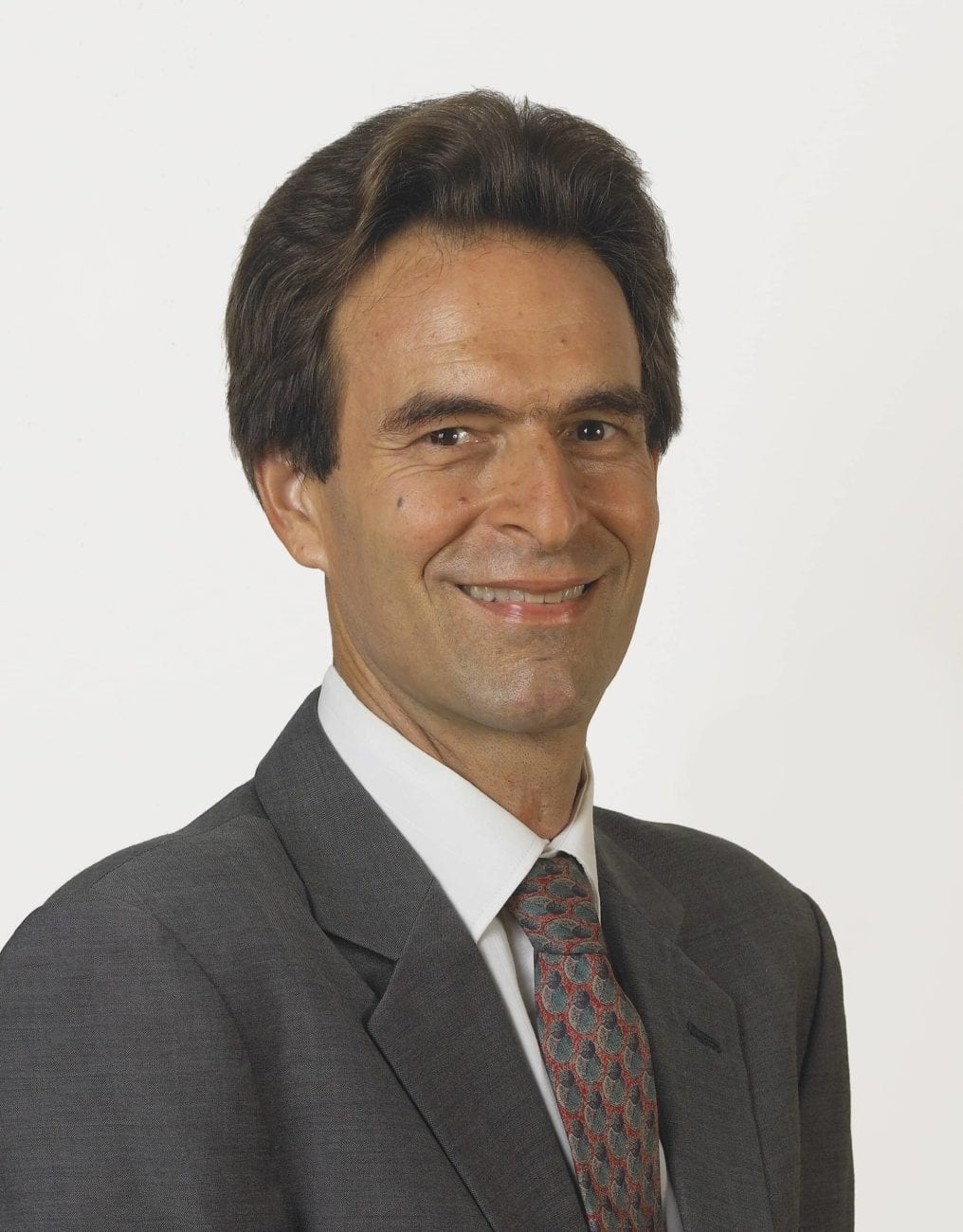
Muhammad Cohen is a former US diplomat and current iGB Asia editor at large. He has covered the casino business in Asia since 2006, most recently for Forbes, and wrote Hong Kong On Air, a novel set during the 1997 handover about TV news, love, betrayal, high finance and cheap lingerie.
In Macau, non-gaming spending mandates and policy prods miss the mark.