
Amid blazing summer temperatures, two companies – CIRSA and Hacksaw Gaming – turned the heat up on their growth plans by announcing, within a few weeks of each other, their intentions to publicly list in June. Slots supplier Hacksaw Gaming was to float on the Nasdaq Stockholm, with hopes of raising up to SEK3.3bn (£257.5m), which would value the company at SEK22bn. On the first day of trading, 25 June, its share price closed at SEK75 (£5.77), just shy of its SEK77 expectation.
Two weeks after Hacksaw Gaming’s announcement, Blackstone Group-owned CIRSA unveiled its own plan for an initial public offering (IPO). The Sportium and Apuesta Total parent company would aim to raise at least €400m (£342m) on several Spanish stock exchanges. At the start of July, CIRSA set a €15-per-share price for its heavily oversubscribed offering, seeking a valuation of €2.5bn. The operator listed on the Barcelona, Bilbao, Madrid and Valencia bourses, with trading commencing on 9 July. CIRSA, which operates around 450 casinos in eight countries, intends to use the funds raised to pay down debt while accelerating its growth strategy.
Perfect storm
The IPO markets have cooled from the pandemic-fuelled frenzy a few years ago, due in part to rising interest rates, tariffs and geopolitical strife, including wars. Yet when looking at the bigger picture, Matt Davey, chair of financial advisory firm Tekkorp Capital, says the timing appeared to be right for both companies. “The IPO window [favourable market conditions] opens and closes from time to time,” he explains, “so you end up with this backlog of companies that would like to go public when the window is closed. When it’s open, they all line up and get ready to move.
“For the IPO market to be open, you need to have investors wanting to go ‘risk on’; they have to want to put more money to work into new entities.” He adds: “The challenge with an IPO is you don’t have a ton of historical data on those companies. As it’s the first time they’ve gone public, they’re higher on the risk spectrum than an existing company. Conditions today are quite nice, though. We’re seeing a number of IPOs all around the world, from Canada, the US, Australia and the European markets.”
When examining Hacksaw Gaming, Julian Buhagiar, co-founder of boutique investment and M&A brokerage RB Capital, points out the supplier timed its launch to make the most of market conditions. “Hacksaw timed its IPO to coincide with a rare seasonal upswing in European listings,” he notes.
“Stockholm has been Europe’s busiest exchange this year, with 23 admissions, and Hacksaw’s oversubscribed launch – a €300m raise, leading to an estimated valuation of approximately €2bn – capitalised on strong investor sentiment in the gaming B2B sector.”
Hacksaw Gaming has turned itself into an attractive investment. In addition to building a proprietary remote gaming server (RGS) and the performance of its Wanted Dead or Alive slot title, the firm has also struck supply deals with the likes of DAZN Bet in Italy, Rush Street Interactive in the US and JOI Gaming in the Netherlands. These partnerships have elevated Hacksaw Gaming’s brand presence and market share across Europe and North America.
Davey adds that the company’s rate of growth makes it an intriguing prospect, with revenue surging north of 100% year on year and EBITDA margins of more than 80%. “In the public market investing world, there’s a rule of 40, which is the addition of revenue growth and EBITDA margin,” he says.
“In this case, you have Hacksaw coming in at 184 as opposed to 40, which is a truly spectacular result. That kind of business demands a lot of attention from investors because they’re chasing growth, profitable growth in particular – and Hacksaw can deliver both. Obviously, it’s still a relatively new business [founded in 2018] and it’s definitely new to the market, so time will tell what the overall value of the business is. However, going public at a €2bn valuation is very punchy. If they can maintain the EBITDA margin and the growth rate, it’s well deserved.”
Terrassa, Spain-based CIRSA has also put in significant groundwork. A €600m bond raise and a €280m equity injection provided the refinancing boost it needed, without which, according to Buhagiar, Blackstone would have been hard-pressed to hit target metrics for a successful and credible float. “Blackstone saw early summer as a calmer valuation window,” he continues. “Coordinated marketing efforts targeting institutional investors reinforced the brand narrative before the IPO.”
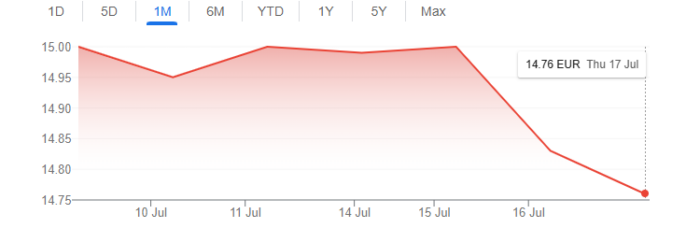
Meanwhile, CIRSA recorded a 49.9% year-on-year rise in digital gaming revenue to €145m for Q1 2025. Such growth can be attributed to the integration of Peru’s Apuesta Total and Portugal’s CasinoPortugal (a 70% and 68% stake was acquired in both companies, respectively, in 2024), alongside Latam expansion in Colombia and Panama.
For both companies, Buhagiar attests the decision to IPO is the result of long-term planning, rather than a hastily concocted exit strategy. He says: “While global IPO volumes are at a nine-year low – especially in Europe, which is down 64% year on year due to tariffs and volatility – regulatory reforms in the UK and Nasdaq Stockholm’s active pipeline are creating medium-term ripples with investment opportunity. The timing of both listings is deliberate. Both capitalise on product storytelling, strengthening market positioning and leveraging improved IPO conditions to fund the next phase of growth, on marketing and operational fronts.”
Here we go again
When it comes to attempts to go public, it’s second time lucky for CIRSA. Blackstone had initially planned an IPO back in 2023, before scrapping the idea later that year. Davey suggests the operator’s previous levels of debt may have been a contributing factor in the U-turn. “Investors don’t massively like over-leveraged businesses,” he explains.
“Perhaps the level of debt was a lot higher, and subsequently the debt-to-EBITDA ratio was a lot higher two years ago. Blackstone may have done a good job of paying down some of that debt and reducing the debt-to-EBITDA ratio. The profitability might have been better, and they might have delivered on some of the more aggressive forecasts.”
In addition to CIRSA’s previous shortcomings, Buhagiar also cites unfavourable market conditions as a stumbling block to Blackstone’s previous IPO attempt. “Early- to mid‑2023 was marked by ongoing fallout from tariffs, inflation pressures, cautious central bank policy and geopolitical instability, creating a frosty atmosphere for large-scale European IPOs.
“Regulators and institutional investors adopted a wait-and-see stance, deterring ambitious initial floats. Moreover, stocks across Europe, especially on Spain’s IBEX, were under pressure, and global IPO pipelines were limited. Blackstone likely concluded that valuation levels would not match CIRSA’s internal pricing targets,” Buhagiar explains.

CIRSA isn’t the only company in the last two years to have second thoughts about an IPO. In April 2024, Games Global filed an IPO prospectus with the Securities and Exchange Commission (SEC) in the US, before abandoning the float on the New York Stock Exchange less than a month later. The initial aim was to raise $275m, which would have valued the company at around $2.1bn.
“This did not come as a surprise,” Buhagiar notes. “2024 was an exceptionally poor year for public launches, as fewer than one-third of SEC filings last year resulted in actual IPOs. Secondly, raising $200m from US investors was always going to be challenging given the gaming industry headwinds at the time and, likely, feedback from potential investors during the book-building phase fell short of expectations.”
Buhagiar clarifies that if a pre-IPO book isn’t filled or is oversubscribed, withdrawing and trying again at a later date is normally the best course of action. He adds that Games Global’s 2024 attempt could also have served as a practice run to gauge interest. “This would be simply testing the waters and not a sign of retreat. On the contrary, it shows discipline and an unwillingness to accept sub‑optimal public-market valuations,” he says.
In a note following Hacksaw Gaming’s IPO announcement, research firm Regulus Partners raised concerns about the supplier possibly generating revenue from black-market sources. While not an immediate issue, Davey believes investors may have more questions further down the line. He notes: “It becomes a bigger consideration over time, particularly as growth rates slow down and things normalise, and investors can come back and question the reliability of certain revenue streams.
“The problem with grey and black revenue is you can’t really underwrite against those. You may be kicked out, or you may be sued – anything can happen to that type of revenue. Investors, certainly in the public markets, tend to shy away from that, and rightly so.”
This puts pressure on Hacksaw Gaming, adds Davey, to prove its revenue is sustainable, as regulated sources give investors more certainty to forecast future earning potential.
Next in line
With the market conditions looking increasingly more conducive to IPOs, other companies may be keeping a keen eye on how Hacksaw Gaming and CIRSA progress. Buhagiar thinks it’s possible the listings could indicate the start of a trend for the industry.
“As with all such public offerings, the proof will be in the medium-term pudding, whereby other prospective public launches will first gauge the success of these two IPOs,” he says. “However, current general sentiment suggests that these IPOs are more of an emerging wave than isolated cases.
“With the European IPO market experiencing drought through H1 2025, their success suggests renewed investor appetite, especially for profitable, digitally centric operators. Hacksaw’s strong debut helps reestablish confidence in the igaming space, while CIRSA’s listing brings a marquee ‘gaming-plus-private-equity’ transaction back to Madrid for the first time since late 2024.”
He also pinpoints certain European markets as being potential IPO hotspots. “Notably, private equity-backed European IPOs have remained consistent despite modest overall IPO counts, raising nearly $8bn in Q1 2025,” Buhagiar notes.
“This signals more gaming sector floats by private equity-backed digital or regulatory savvy operators in the next 12‑18 months, possibly in London and Amsterdam, too.”
Following on from the example set by Hacksaw Gaming and CIRSA, the question remains whether other companies in the gambling industry will take the IPO plunge. The most exciting subject of speculation is bet365, especially given rumours the Coates family might be looking to sell the 25-year-old online giant for an estimated £9bn, which could include a float in the US. As well as bet365, Davey offers up some other potential candidates to look out for in the next 18 months.

“I think there’s at least another half-a-dozen companies out there that look like they are potential candidates for IPO,” he says. “We’ve talked about bet365 before, we’ve talked about Kaizen [Gaming] and also Superbet. There’s a range [of private companies] that I think will start to dip their toes into the market and see what kind of response they might get. The banking industry is pretty well versed at this, and they can go out there and gauge the appetite before these businesses take the big plunge themselves. My guess is we’ll definitely see a few more IPOs over the next 12 to 18 months, and possibly on a US exchange. But looking at the European market, it seems those exchanges are also available.”
Buhagiar is of the opinion Games Global might try again, depending on the success of CIRSA and Hacksaw Gaming. Other suppliers, too. “SG Digital – Light & Wonder’s igaming division – has demonstrated strong revenue growth and consistent recurring income from long-term operator contracts, making it a desirable IPO target for funding global expansion, particularly in North America. Regulatory clarity in key markets, such as Canada and Brazil, should support its fundraising appeal.”
He also highlights Novomatic. “With €588m operating income in 2021 and a sizeable arsenal of slot, terminal and casino content in more than 50 countries, Novomatic could seek a €6bn valuation to fuel M&A and capitalise on strong earnings. Previous attempts in 2017 were postponed amid regulatory uncertainty; however, recent corporate activity, such as the Vikings Casinos M&A, suggests renewed readiness.”
It’s too early to determine the success of the Hacksaw Gaming and CIRSA IPOs. The key takeaway is that the interest is very real, and the financial market conditions do mean that investors are primed to deploy capital. With a more stable market in play, it is possible that betting companies could very well be attracting serious attention from bankers and investors in the not-too-distant future.
The post In the public domain: how CIRSA and Hacksaw Gaming could pave the IPO path first appeared on EGR Intel.
With the recent IPOs of online slots supplier Hacksaw Gaming and international gambling heavyweight CIRSA, could these moves signal the beginning of a fresh wave of industry listings?
The post In the public domain: how CIRSA and Hacksaw Gaming could pave the IPO path first appeared on EGR Intel.