
The opening of Betsson Group’s second Latam office, in March 2025, this time in the Argentine capital of Buenos Aires, served as the perfect reminder of how entrenched the operator is in the region.
Betsson Group’s Q1 2025 results emphasised the point, with the €74.5m worth of B2C revenue generated in Latam not only rising 70% year on year but also making up a quarter of total revenue for the first three months of the year.
Besides holding licences in Argentina, Brazil, Colombia, Peru, Paraguay and Mexico, the operator is active on the sponsorship front; the sponsorship deal with Argentina’s Boca Juniors, one of the continent’s most famous football clubs, was extended for another three years until 2028.
Elsewhere, Betsson Group continues to gain ground in Peru, following the launch of the country’s regulated online gambling regime in 2024, while a technical product launch in Paraguay was executed in February.
Despite the gains, Betsson Group has had a battle on its hands in certain markets thanks to an unpredictable and capricious regulatory environment at times, most notably the 19% VAT on player deposits in Colombia, which was imposed unilaterally by the president, Gustavo Petro, in February.
Meanwhile, Brazil’s regulated market is still finding its feet, with the country’s Ministry of Finance proposing a myriad of changes to its gaming regulations it wants to impose by the end of 2026. Even so, the ban on welcome bonuses and 15% tax on player winnings above a R$2,824 (£370) hampers licensed operators.
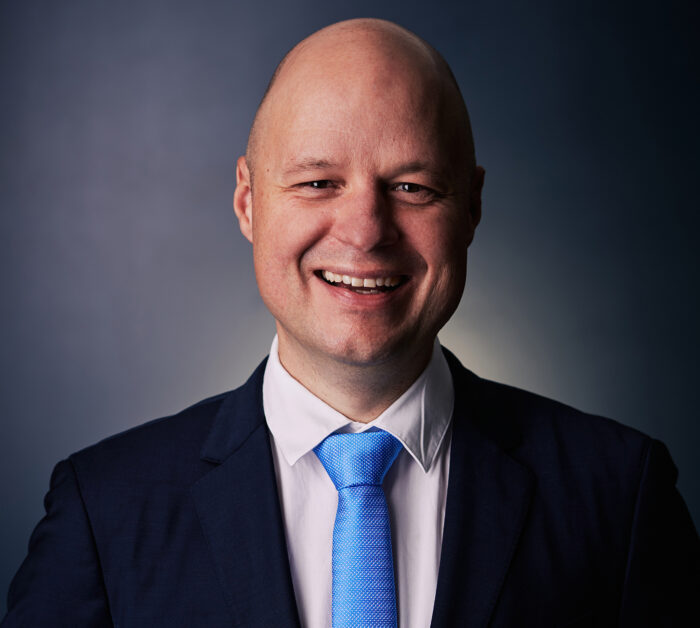
Speaking to EGR in person at Betsson Group’s Malta office, CEO Jesper Svensson admits the operator is content “waiting until the dust settles” in Brazil before taking its investments to the next level. He also highlights how sudden regulatory changes can make certain Latam markets “unviable”.
EGR: Latam made up 25% of Betsson Group’s Q1 revenue, with record customer deposits in the region. Which markets are performing particularly well?
Jesper Svensson (JS): The two markets performing best for us are Argentina and Peru. Peru has recently locally regulated, and we see really good traction there, so we’re happy about that. In Argentina we are one of the leading companies – and have been for the last year. We’re growing strongly in those two countries but, in general, we see growth in many territories.
EGR: How has the launch of the regulated Brazil market affected your plans?
JS: We have never really been big in Brazil, but now we have a licence, so we’re starting slowly. There has been a lot of investment going into Brazil from a lot of different competitors to us, but we are taking it slow – we see Brazil as a really great long-term opportunity for us. For the time being, we are waiting until the dust settles and then we will gradually increase our investments in the market.
EGR: What sort of regulatory change do you find the hardest to adapt to when it’s introduced in Latam?
JS: I think we are able to adapt to most regulations, but some can make a market almost become unviable. What we see in Latin America right now are instances of increased taxation on gaming, and that has really put the market in a position where its longevity is in question.
This is where regulators sometimes go wrong; if you make the conditions too poor for the companies that seek to be regulated and seek to pay tax, and if the conditions become too limiting from a player point of view, it means they will open up a big black market [gambling website]. That means no tax and no protection, so there’s a balance there for those countries to strike. Right now, I think Colombia is the country that has not been able to do that in a positive way for the regulated industry.
EGR: Does seeing legislation like the 19% VAT on player deposits make the company rethink its presence in Colombia?
JS: Yes. When conditions change, that naturally means we need to take another look at that market. Over time, we hope those things will still work out in a positive manner but, for the time being, we have stopped investing in Colombia. Those things can change when the conditions hopefully will be reversed, but that is the industry for the moment.
Regulatory changes can come quickly and then you need to be really fast and agile. One of the strengths of Betsson is that we have many legs to stand on. We have 25 different licences, so we’re operating in many jurisdictions. That also gives us stability. If something happens in one place, we always have the other countries to rely on. It’s not easy, but it’s good to have a portfolio of countries so we can spread the risk.
EGR: How challenging is the ban on welcome bonuses in Brazil?
JS: It’s another example of the type of measure that the regulated industry can’t do but the black market can, so it puts the regulated industry at a disadvantage, again. I know many of these measures are supposed to be protective towards the players but, unfortunately, they can have the opposite effect.
For us, it’s [welcome bonuses] something we want to offer to our customers. Not just in gaming; it’s very common across industries that you have coupons, some sort of rebate, or first-time offers regardless of what product you are buying.
We would have liked to offer the same, but it’s not as if the industry stands and falls with an initiative like that – it’s not that material for us. The unfortunate part with this measure is that the black-market operators will offer something the regulated companies can’t.
EGR: Having been in Brazil since 2019, how has Betsson Group handled the country’s transition from a grey to white market?
JS: If you take Peru and Brazil as examples of the two most recently regulated markets, I think you need to give it a year or so before you can really see how it’s going. We are positive about how it has started in Peru, where we actually have more business than we do in Brazil for the time being.

EGR: In April, Brazil’s Ministry of Finance published a list of 13 regulatory changes it wants to make to the market by the end of 2026. Would it be frustrating to see the legislation updated so soon?
JS: It’s frustrating but it’s also important that things are being changed as a market becomes more mature. I think the regulators that are the most flexible and adaptable will be those who will eventually have the biggest channelisation of the market, and they will then have the highest tax income and the best protection for the players.
EGR: Are these markets in danger of overregulation?
JS: The example we have seen in Colombia is the one that stands out, whereby you can put taxation at a level where it is almost unviable for the industry. That will not have a positive effect on the market over time. There is always a risk for those types of elements, but it’s manageable. You need to be flexible, you need to be adaptable, you need to be very agile and keep investing where you see the best opportunities for the time being. They may be very different in a year from today, or two years or three years’ time, but I think that’s the nature of any industry.
EGR: How are the Betsson, Betsafe and Inkabet brands performing in Peru? What did you make of the 12% GGR tax introduced in 2024?
JS: The brands are performing in line with expectations so far. The tax rate has had an impact on us because of our size in Peru but, overall, that is a number that we think is okay to work with. When you have a regulation that has the tax rate of 12% of GGR, you will most likely end up with higher channelisation, which will give the regulator more tax revenue than the countries that impose too high a tax on the regulated industry.
EGR: How have you seen player habits evolve in Latam over the years?
JS: The offline to online element started a bit later in Latin America than it did in Europe, given the accessibility to fast internet and things of that nature, so that is probably the biggest change we have seen from when we started there. Now, all those things work perfectly well in Latin America in the same fashion as they do in Europe, so accessibility has improved. There is also the big element of payments that is unique for each country, so that is something that we always focused a lot on.

EGR: How are preparations going in Paraguay after obtaining a licence for the country at the end of 2024 and following the technical launch in February?
JS: It’s very early, so we’re still improving the product. The positive thing for us is that Paraguay is close to Argentina, both geographically and, in many ways, they’re very close culturally as well. We have a good spillover on the marketing efforts we have been doing in Argentina; for example, the sponsorship of Boca Juniors. We already have an awareness there and we are positive that we aren’t starting fully from scratch in Paraguay, but we will gradually increase our investments into the country.
EGR: How much of an impact do these sporting sponsorships have on both revenue and customer acquisition in Latam? Is the impact comparable to Europe?
JS: It definitely has a large impact and helps to create awareness. The clubs we are sponsoring have a lot of fans – they buy shirts and see the brand. It’s been successful for us. And the same goes with our two biggest sponsorships, which are Inter in Italy and Boca Juniors [in Argentina]. Both those combined give a lot of exposure to us. Inter is also a club that has a big foothold in Latin America; they’ve had big stars like [Brazilian striker] Ronaldo and now their captain Lautaro Martínez, who is massive in Argentina.
The reality is that in South America, for example, the [South America club competition] Copa Libertadores is as popular as the Champions League is in Europe, so it’s really big locally. It’s very good for us when the teams we sponsor get the exposure in those cups. Last year, we had Racing Club de Avellaneda in Argentina [sponsored by Betsson] win the Copa Sudamericana, which is probably comparable to the Europa League. But in Latam, those tournaments are massive, even if they are not big in Europe. At the same time, the Champions League in Latam is very big too.
EGR: Are there any other Latam markets Betsson Group is eyeing up?
JS: It’s fair to say we keep an eye on every single market over there. We are also live in Mexico, for example, but we look at every country in the region. Hopefully there will be more positive regulatory changes in some countries that we can tap into. But all in all, I think we have a good overview of the region, and we will keep exploring it.
The post Q&A: Betsson Group’s CEO on expanding the operator’s Latam footprint first appeared on EGR Intel.
Jesper Svensson discusses strong performances in Argentina and Peru, the power of sports sponsorships and how overregulation has, for now, curtailed the company’s investment in Colombia
The post Q&A: Betsson Group’s CEO on expanding the operator’s Latam footprint first appeared on EGR Intel.