
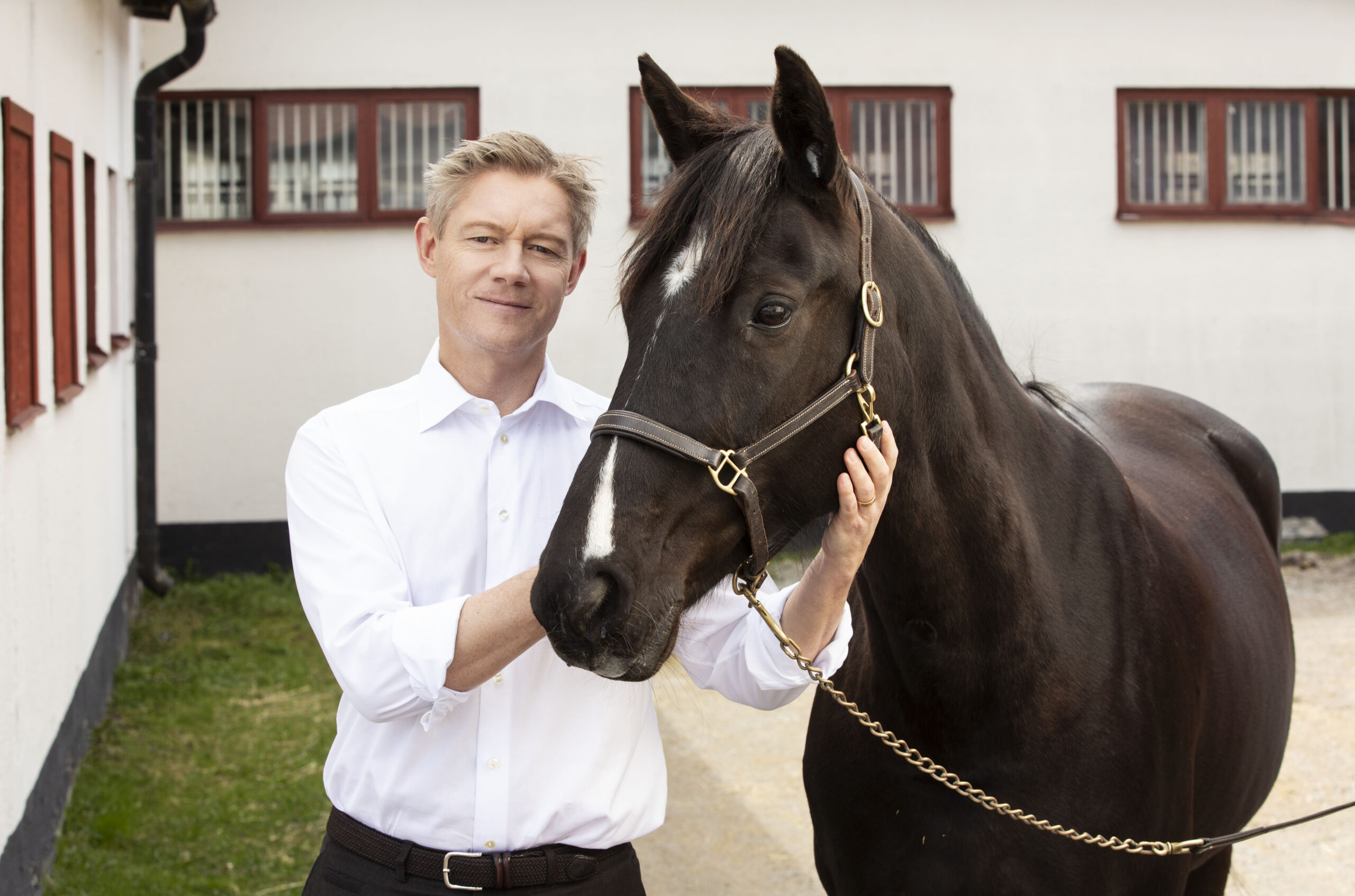
Hasse Lord Skarplöth has been at the helm of Swedish horseracing betting operator ATG since 2013 and, by this point, is well equipped to deal with most problems thrown up by the turbulence of Sweden’s online gambling market.
However, dealing with a national recession, an increasing presence of the black market and last year’s gaming tax rise is a lot to handle for even the most seasoned CEO. Despite this, Skarplöth is bullish on ATG’s future, as the operator looks to build on momentum gained in both sports betting and igaming verticals, as well as continue its dominance in Swedish horse betting – something he claims is in the company’s “DNA”.
The aforementioned obstacles still draw the ire of Skarplöth, particularly the gross gaming revenue (GGR) tax increase from 18% to 22% in July 2024, with ATG’s chief telling EGR he stands by his claims that online casino should face a higher rate on account of being “more harmful”. The first quarter of 2025 saw the operator pay SEK303m in tax alone, an increase of SEK32m year on year, with the company citing the tax hike as one of the “main reasons” behind the €122m slump in its Q1 operating profit, which represented a 31% decline compared to the same period in 2024.
And then there is the controversial topic of Sweden’s channelisation rate and the Swedish Gambling Authority’s (SGA) approach to combating black market activity. Skarplöth pulls no punches in his assessment of the regulator, bemoaning its slow response to the threat and calling on the authority to “step up” in the face of such adversity.
EGR: It’s more than 12 years since you became ATG’s CEO. What inspires you to keep going?
Hasse Lord Skarplöth (HLS): To use ice hockey terms, it’s been like three periods. I joined a monopoly only offering horse betting, where the first period was to lobby for a licensed market and to ensure that market was attractive for ATG. The second period involved entering the new licensed market, which meant we could also offer sports betting and online casino and additionally go abroad with a business-to-
consumer offer.
The third period is about going all international, primarily in the Nordics. We have acquired a Danish company [25syv, operator of the brand name Bet25], so we are established there, still very small, but growing. And now Finland is also happening [via an online sportsbook and casino joint venture with Suomen Hippos in the soon-to-be regulated market].
EGR: The Swedish government recently announced it would reduce its influence over ATG. How critical do you view that separation from state influence regarding ATG’s future plans?
HLS: I don’t think it matters that much. ATG is 100% owned by the Swedish Trotting Association [and the Swedish Horseracing Authority], but the Swedish government has had a majority on the ATG board since the company was founded in 1974.
It made sense then as ATG had a monopoly over betting on horses in Sweden, but since the market was re-regulated in 2019, we are now a competitor among 100 others in this market, so no different to others.
It made perfect sense for the state to fully hand over ATG to its owners now, though it’s too early to see whether it means anything for the company. I don’t know my new board yet, but seeing is believing. I think it makes sense for the government to leave.
EGR: Is there still room for state-owned operators in a commercial market? Should the government dispose of Svenska Spel?
HLS: It’s not ideal. I’m not on top of what is happening with Svenska Spel, but long term, I do not think it is good for the state to be owning a licensed operator. There are other parts of the Swedish market which are still under a monopoly and there – yes, absolutely. But in a competitive, licensed market? No.
EGR: Are monopoly online operators a thing of the past?
HLS: Yes, it belongs to the past. Several European countries have defended their monopoly, but I always see that leading to a bad spiral because to keep the monopoly the state tends to increase demands on the monopolist, within the responsible gambling space in particular.
Politicians tend to impose legislation on the monopolist, which decreases its attractiveness for consumers, and this then drives customers towards unlicensed operators. It’s striking that there are few political arenas like the gambling arena, which are so populistic and with so few fact-based decisions. I think the monopoly times are behind us.
EGR: How impactful was last year’s tax increase on GGR to 22%? Is it still your view that just online casino should have seen an increase?
HLS: Yes, we still believe it makes sense to have higher taxes on more harmful products. We increased our tax cost by SEK200m per year, and we make up 40% of the increased tax revenue to the state. We still have the same position, so it makes sense to implement higher taxes for online casino.
EGR: Sweden was impacted by a recession last year. Are you seeing signs that the worst is over or are Swedish players still facing pressure on their personal finances?
HLS: We were quite early in Europe. We started to see a negative trend, mainly in ARPU [average revenue per user], in autumn 2022, in connection with the election of the Swedish parliament. Our customer base has developed well, however, ARPU has decreased and more than offset the gains from an increased customer base.
During the election of autumn 2022, there were tough economic times ahead and that affected Swedish households more on a psychological level than in reality. But reality hit hard a few months later. Swedish households have been extraordinarily hurt, and it has been a tough few years.
In January 2025, we could see signs of things getting better, as interest rates were down and inflation was under control, but the hope we had in January has disappeared due to the chaos the Trump administration has started, with the markets being totally crazy.
EGR: Naturally, last year’s events raise the age-old question – do you think gambling is ‘recession-proof’?
HLS: If I look at the history books, I’d say gambling is quite recession-proof. But this time, it has been different.
In times of recession, what happens? A few percent of the population lose their jobs. The remaining 95% are more or less not hurt at all. This time, nearly all households have now got a lower disposable income. This is something completely different to what we are used to in Sweden.
With lower disposable income for households, it makes sense that they spend less money on gambling. This time, we have been hurt.
EGR: ATG’s sports betting and casino verticals both grew by 8% in 2024. Are you seeing much crossover from racing bettors who then move into igaming?
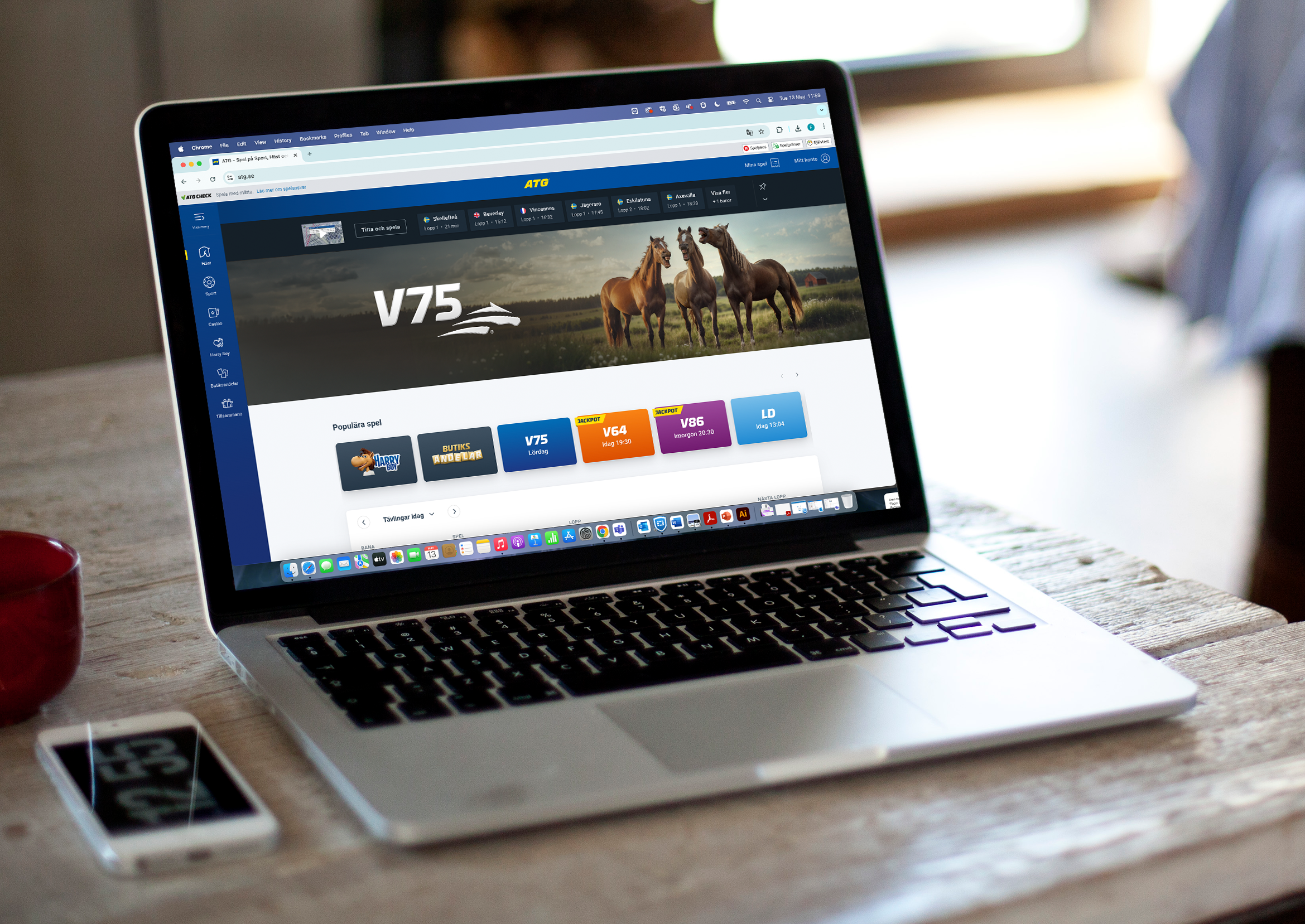
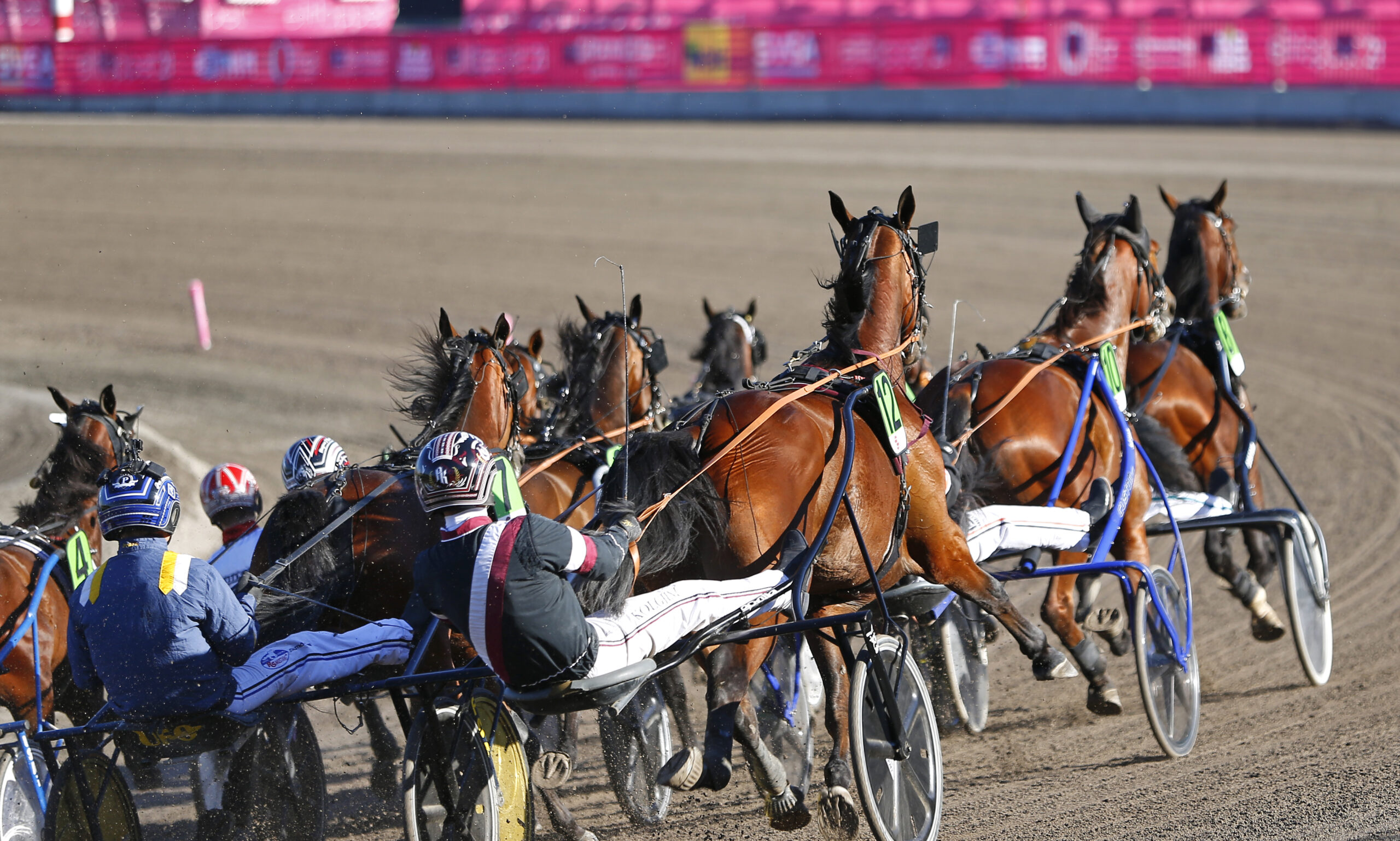
HLS: Yes, they are complementary products. We are the one with the horses. That’s our DNA, our identity. I’m surprised by the success we have had within sports betting and becoming the market leader in Sweden. It makes sense because we know our horse betting customers are also into sports and online casino, and we are quite unique when it comes to horse betting. It’s our window to attract customers. We would like to cross-sell. We would like to become a one-stop shop.
EGR: An ATG-led report in 2024 found that Sweden’s channelisation rate could be as low as 69%. What more can be done to keep customers within the regulated market?
HLS: It’s critical for every market to track channelisation with a wellvalidated model. That is something missing in many markets, and it was lacking in Sweden. That’s why ATG decided to develop web traffic analysis. According to our model, the unlicensed market is 10 times bigger currently than it was in 2019 [the year Sweden re-regulated].
Nowadays, the biggest problem in Sweden is that current legislation states that the SGA has to prove unlicensed operators are intentionally targeting the Swedish market to define them as illegal, and the SGA has been very unsuccessful in proving it.
The good thing is that the government has announced an investigation to change the law, hopefully ending up with something similar to what you have in the UK, where it will be illegal to offer unlicensed gambling to Swedish customers. I would say that is the number one priority.
Additionally, like many other markets, we have a self-exclusion system [Spelpaus]. What we see is that customers will exclude themselves, get no help, and a few days later end up in the black market. That is a big problem, not least for us licensed operators, because these problems will hurt the industry.
What we are arguing for is that those who self-exclude should be offered help within 24 hours. I’m aware these things are not any kind of silver bullet.
EGR: You say the unlicensed market has increased tenfold since 2019. Do you view that as a failure that ultimately lies at the door of the SGA?
HLS: In Sweden, we are in urgent need of someone with an overview of the total market – legal and illegal – someone who takes responsibility for ensuring we have a good, well-functioning market.
The one to take that role should be the SGA, and I don’t think they have taken it, at least not in the last five or six years. They need to step up because if they had taken on that role, they would have developed their own web traffic analysis system four or five years ago. They have started now, but it’s too late.
Another reason why you need someone taking responsibility for the entire market is to be efficient, we need to co-operate: operators, the SGA, the government, harm associations and professors within this area, etc.
EGR: What do you hope to see as a result of the government’s ongoing evaluation into the regulated market?
HLS: The most critical thing is to make it illegal to offer unlicensed gambling to Swedish customers, that is priority number one. The good thing is, and this is not always the case, we are all in line here; the SGA, the harm associations, the operators. Everyone is in agreement, so hopefully it could happen.
EGR: In February, ATG published data showing the company had contacted 1.6% of its customer base over high-risk gambling behaviour between July and December 2024. Can you reduce this percentage, or will a small portion of a customer base always account for a large share of revenue?
HLS: It’s complex. You will always have a customer base with different degrees of risk. Say your customers are measured between one and 10, where 10 is having serious issues with their gambling. I would consider our most important task is to get our existing customer base to go downwards in risk – turning a person that is at a 10 into a nine, before hopefully an eight and so on.
Operators claiming ‘2% of our customer base is a 10’, I don’t think that is a true snapshot of reality. What is important is how you develop your customer base. So far, the industry is quite underdeveloped in showing that kind of data.
Of course, you can get 100% ‘green’ revenue and 100% ‘green’ customers by just stopping your ‘red’ [at-risk] customers from placing bets with you. But what kind of help have you given these guys by just pointing them somewhere else? None.
EGR: Ahead of Finland adopting a commercial model in 2027, ATG has announced a joint venture with Suomen Hippos, the Finnish Trotting and Breeding Association. The new business will be owned 50% by each party, offering horseracing, sports betting and online casino. Though it will be named and branded at a later date, has a roadmap for its expansion into Finland been established?
HLS: ATG is a tote provider that offers sports and online casino as complementary products. Our mission statement notes that we should aim to be the engine of the horse industry and, to a large extent, the financial engine. It makes sense in Sweden, since all our profits finance the Swedish horse sector.
However, I would say that our responsibility goes further than that. It makes sense to widen our footprint to the Nordics and to become a financial asset for local horseracing in countries outside of Sweden. You could say our vision is to become Nordic. We see a lot of cost and revenue synergies, from a gambling perspective, by doing that.
EGR: ATG’s Denmark subsidiary, Bet25, is now a market leader in horse betting. Are there any lessons learned from establishing operations there that can be used to shape the company’s ambitions in Finland?
HLS: Absolutely. Denmark is the reason why we dare to do it in Finland. It’s a proof of concept. Without any kind of exclusivity when it comes to pools or anything, we have been able to go from zero to around 70% [of market share]. It’s proof we have a gambling experience that is competitive.
The post Heavy going: ATG’s CEO on testing conditions in the Swedish market first appeared on EGR Intel.
Hasse Lord Skarplöth sheds light on the most pertinent issues impacting Sweden including the ongoing debate over the scale of its black market and calls for the nation’s gambling regulator to “step up”
The post Heavy going: ATG’s CEO on testing conditions in the Swedish market first appeared on EGR Intel.