
It’s another quarter with another set of records breaking for Betsson, with gaming turnover and customer deposit watermarks being swept away in the first three months of 2025. The improvements that come to light during the Stockholm-listed firm’s earnings reports continue to show a business that remains on an upwards trajectory.
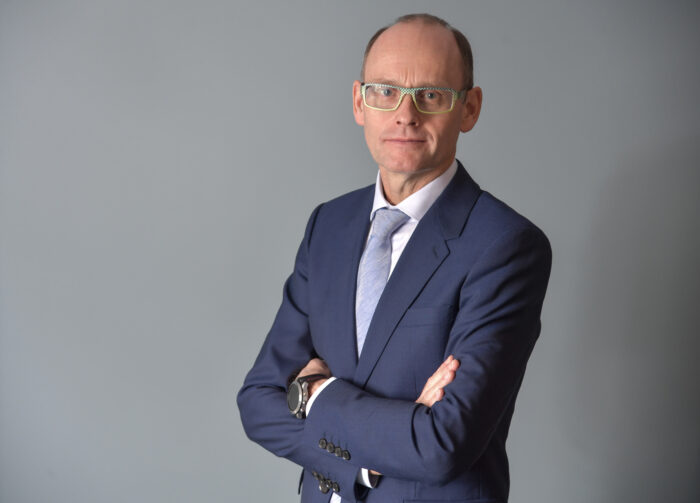
Led by CEO Pontus Lindwall, who in this financial report portrait is featured alongside former Inter Milan and Argentina star Esteban Cambiasso in typical relaxed Lindwall style, gains in Latam and Central and Eastern Europe and Central Asia continue to push the company on. While group revenue was up 18%, a 70.3% surge in revenue from Latam was pointed out as a key highlight during the reporting period.
And while the Nordics remains in decline, Western Europe, particularly Italy, were also cited as top performers for the Rizk parent company. Staying in Italy, a minor M&A deal was completed during the quarter to take ownership of BetClic – not to be confused with the Banijay Gaming brand of the same name.
More M&A in Poland was confirmed, while the takeover of the Dutch assets remains in the pipeline. Operationally, a shuttering in Nigeria was offset by launches in Paraguay in Q1 and Brazil in Q2, showing Betsson homing in further on its Latam aims.
Here, Lindwall talks EGR through the start of the year, how he thinks the company is set up to resist economic headwinds and why politicians need to listen to the regulated sector.
EGR: A spike in the share price came after yet another strong quarter. What’s your initial reaction to the performance over the first three months of the year?
Pontus Lindwall (PL): It’s a very strong report, and we’re continuing on our path which we have been for a couple of years. There’s been strong development in increasing our efforts into our global brand Betsson via sponsorships, as well as increasing activities in the regulated markets. So, yes, we’re really happy.
At the same time, we have a profit margin of more than 20%, and that is while still investing strongly in continued growth. I usually get the question, “What’s in this report? What should I focus on?”, and in my view, it’s the fact that we invest by employing a lot of new people to be able to build our products and take them out to all the markets where we operate. And we invest in marketing quite heavily, and almost everything goes through the P&L. Whereas other companies on the stock market – our peers – when they invest in a new factory or a new machine, it goes on the balance sheet and it doesn’t impact the P&L in that way.
EGR: You had a note in your CEO comments about the industry being recession resistant. What makes you confident in this regard?
PL: There are turbulent times now, but we have been through several periods of turbulence before and I think we can say from what we have seen so far, we are quite resilient.
The cost of putting a bet on a soccer game or playing a few hands of blackjack seems to be something people prioritise to do even in tough times. It’s a different kind of spending compared to buying a new kitchen or buying a new, more capital-intense investment; these are the first ones to go – a new car, a new TV set, whatever.
We have been through tough times before and we have proven to be resilient. Now it’s turbulent as well, but we are quite confident we will be able to continue.
EGR: Looking at Latam, Betsson has only been live in regulated Brazil since the start of April. How is it progressing there? You mentioned it had had little impact on Q2 thus far on the earnings call.
PL: For me, it’s too early to make any kind of judgement. I’m in the same position as I was before we launched, in that it’s a large market and it has a great potential in general. I think Betsson can succeed there because we have proved we can succeed in other Latin American markets. But we’re going to be careful. We’re going to start off slowly. We have to calibrate the product. The product has to be calibrated for every single market before it is really investable. And so that’s what we’re going to aim for. Then when we get traction, then we’ll start spending and build up.
EGR: Betsson has used sponsorship to strong effect in Latam with Boca Juniors as the headline example. Do you see this marketing method as better applied in the region than Europe or other markets?
PL: I think sponsorship has been really good in Latam. Actually, the Inter Milan [front-of-shirt sponsorship] has also had an effect there. Strangely enough, I meet people on an almost weekly basis, at least in Europe, who know we sponsor Boca Junior. It goes both ways and it’s very obvious that those popular teams around the world have an impact.
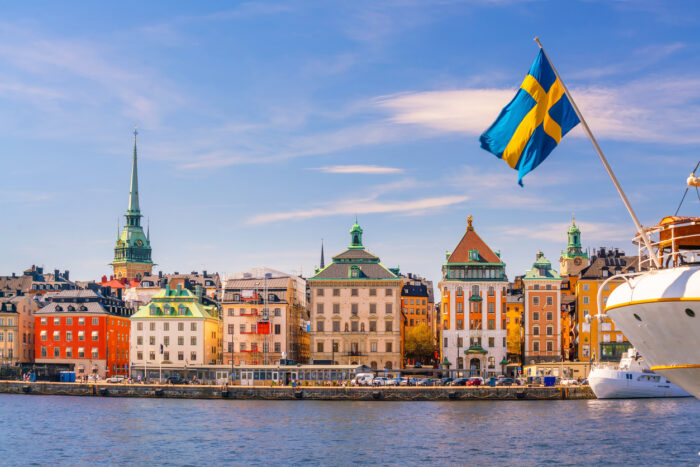
EGR: On Sweden, some competitors have mentioned the impact of the GGR tax hike in their Q1 reports. How has the new 22% rate impacted Betsson since July?
PL: It gives us less profitability and less ability to market ourselves. Changes like that have a negative impact on channelisation. It’s hard to say there is successful regulation if you have 30%, 40% or even 50% of revenue going outside of the regulated market.
In that regard, we believe that it wasn’t a good move to do the tax rise. We communicated that. But, I guess it’s a learning curve for politicians that internet gaming is not a static thing. It’s a dynamic thing. And, if you push something in one place, it will have an effect in another.
EGR: Do you trust the Swedish government with its upcoming review of the Gambling Act, given its role in the tax hike?
PL: I think they do the best they can. I think they have good intentions, but sometimes it is the [lack of] knowledge and deep understanding of different measures. We wish politicians would listen to us more, not only in Sweden, but everywhere. I think there is a little bit of a lack of trust. They believe we speak for our own sake, which we do in a way, but our interest goes hand in hand with the interest of governments. I hope for the future that we will be listened to more. I hope politicians understand that we are not there just to make changes for the benefit of Betsson, but the entire regulated gaming market.
EGR: On M&A mentioned in the report, you acquired a small Italian operator in BetClic. How do you expect that to align with the rest of the Italy-facing operations?
PL: It was an opportunity to acquire a relatively small operation there, but it does have a customer base. We’re going to migrate it to our sportsbook brand and use the technology that we use. It’s not about acquiring their tech, but acquiring a business which is parallel to ours, so we can merge and get some more scale. It’s not a big transaction, so it doesn’t really impact the numbers that much.
EGR: In Poland, you took full ownership of Bukmacherska. Is it a case of getting a market position ahead of potential online casino liberalisation there or focusing on the sports opportunity?
PL: Poland is only sports betting for the time being but it is quite a big market. There are 40 million people and a strong growth economy. It’s an interesting market. We believe markets that have [monopolies] will regulate casino at some point because they need to in order to look after players and get more tax revenue. Even though there is no outspoken path to that regulation from the government yet, we believe it will happen at some point. That also goes for France with online casino, too.
EGR: Finally, the winding down of operations in Nigeria was confirmed in the Q1 report. Will the impact be minimal from this decision?
PL: It doesn’t have any impact on the P&L at all. It’s a business that we didn’t fully own and we didn’t develop in the way we had hoped and expected. We have put an end to it and will put our efforts into markets where they will have more effect.
The post Q&A: Betsson AB CEO talks tax and managing M&A first appeared on EGR Intel.
Pontus Lindwall says he hopes politicians will listen to regulated operators over tax hike fears in the future, while business completes two acquisitions during Q1
The post Q&A: Betsson AB CEO talks tax and managing M&A first appeared on EGR Intel.