
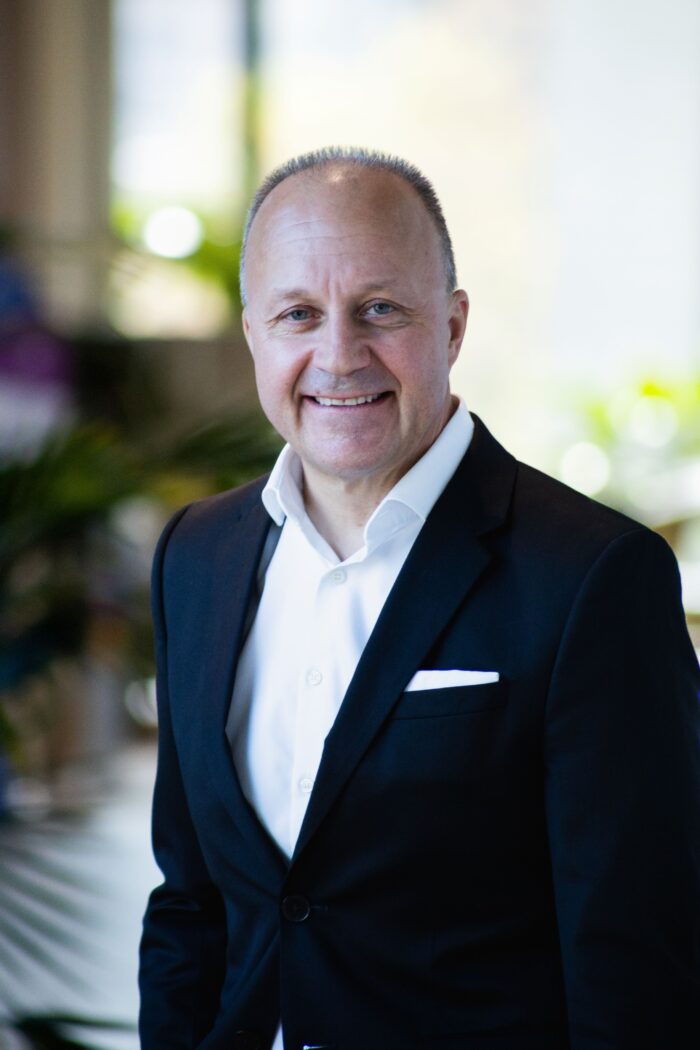
Dieter John has made his presence felt since stepping up to become CEO of Fortuna Entertainment (FEG) in January 2025. The foundations have been laid for his new ‘FEG 2.0’ vision, with the Central and Eastern European operator gearing up for a concerted push under the boss, who only joined in March 2024 as group chief finance and operations officer.
He replaced Victor Corcoran in the role, at a time when FEG owner Penta Investments was weighing up a sale of the privately owned operator. A disposal didn’t materialise, leaving John to kick on with his plans, including reshaping the senior leadership team and expanding into Montenegro by acquiring a 51% stake in the market’s second-largest operator, Lob.
Speaking candidly, John pulls back the curtain on FEG, which has a sizable footprint across its native Czechia, as well as Romania, Slovakia, Poland, Croatia and Montenegro. With its flagship Fortuna brand complemented by local heroes PSK (Croatia), Casa Pariurilor (Romania) and the aforementioned Lob, the multi-brand business is eyeing further expansion across the continent.
EGR: Dieter, how have your first 12 months in the role been? Were there any surprises?
Dieter John (DJ): The last 12 months were extremely eventful, exciting and a lot of fun. I would not like to miss a single day. So, when I took over on 7 January one year ago, my start was very smooth. As I had held several CEO positions before in other companies, in other sectors, I knew exactly what was coming up. Secondly, I already spent one year with the company as group chief finance and operations officer. I knew what the company was all about. I knew the strengths, weaknesses, opportunities and threats. That’s why I could immediately launch a new strategy.
Penta Investments has owned FEG for 20 years. There were some conversations about whether they should remain as the sole 100% shareholder, or whether FEG should onboard a global partner. We dropped these discussions at end 2024 and decided to rock the market on our own. Then I wrote out the revised strategy, which is FEG 2.0, which means the next 20 years of growth and value creation.
We launched a holistic transformation programme, which we titled ‘F4’ – ‘Fortuna Fit for Future’. Looking back, 2025 was a very busy year, but it was the best year ever in 35-year history Fortuna. We had best financial performance. I think we have achieved on technology, product and the commercial side, more than ever before, and we have started to enter and expand to new markets. So retrospectively, 2025 was a very good year. And of course, the main challenge now is to maintain this momentum, to keep this dynamic and to continue over the coming years with the same speed.
EGR: You set about refreshing the C-suite, with a new CFO, Uroš Bibić, and Sotiris Haritos appointed CTO in 2025. What was the thinking?
DJ: Change always starts from the top. You don’t clean the stairs from the bottom; you start at the top. I changed more than 70% of the top leaders in the company. I didn’t do it just to manifest that I’m a powerful guy, [but] because I considered the change necessary. There are now 11 members in the executive committee, half group-level, half market-level, with 11 nationalities – we can hardly be more international. We are coming from different industries, different sectors, with different experiences, people who have done a lot of growth, market expansion, people who have done a lot of restructuring, while others have done a lot of transformation. We have now a very broad and diverse skillset.
The key point was to have a team which I’m convinced with and which can proactively drive and implement the new FEG 2.0 strategy. The management upgrade will continue. We are now going to the next level throughout the organisation, because I want to make sure that everybody who has a leading role in the company is fit for the challenges ahead. Some are already fit. Some need to be a little bit trained, like in the gym. It’s all about the team and all about people.
If you look to all our competitors, the products are very similar. The technology is rather similar. It’s very much a commoditised industry. That’s why it’s super important to find the differentiation and to find the USP, but the biggest difference is the people, and that’s why I spent so much effort on that. I’ve seen companies with unspectacular products but a great team that win and I’ve seen companies with great products, great markets, number one position but with a medium team losing share.
EGR: What are the benefits of having multiple brands? Was there any consideration about switching to a singular brand in Fortuna?
DJ: We’re operating in six markets with four brands. Each brand has its legacy and history. The market characteristics and the competitive environment is different market by market, but one thing is common, that each of our brands have almost 100% awareness. That’s why I would be stupid to rebrand. Number one, it’s simply cost. Number two, I may lose customers. Number three, it will take a lot of time and effort and money to rebuild the same brand awareness, recognition and perception.
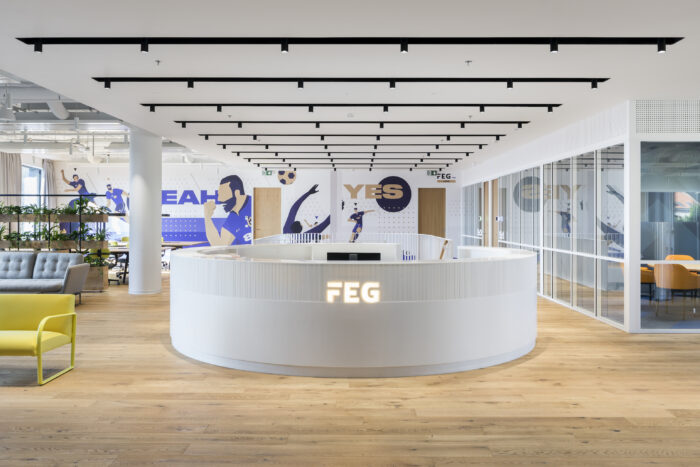
We have online markets. More than 80% of FEG revenue is online, particularly in Czechia and Slovakia. We have markets which are much more retail driven, like Croatia, Romania and Montenegro, where people see the betting shop as a marketplace for socialising and interacting, stuff like that. Then we have, for instance, Poland’s state monopolies don’t allow anything other than sports betting, so we can’t do gaming yet. And so, each market is different. The market characteristics are different. Regulatory environments are different, and we have been well established in all our markets for dozens of years. It would not be wise to sacrifice that just for brand unification purposes.
EGR: Are you able to disclose any market share figures for FEG?
DJ: We are in markets which are very fragmented. We have markets where the regulator has given 40 to 50 licences, such as Montenegro, Poland and Romania. That means there is lot of competition. But I’m very proud that in all our markets we have a podium position. We are usually the number two, and I believe that’s very important to protect that and to even strengthen and reinforce it, because we will see consolidation in the market.
In three to five years’ time, there won’t be 30 to 40 operators, because increased taxation and strengthened regulation will lead to consolidation and will see the small players disappear and provide high entry points for new entrants. I believe that the top three or four operators will own 90% to 95% of the market. We have a very strong ambition to expand to new markets. It is absolutely mandatory to strengthen, reinforce and increase the market share in each and every one of our existing markets.
EGR: What would stop FEG from taking gold medal positions in those markets? Tax, regulation, something else?
DJ: There is nothing which can stop us. That’s very clear. We are extremely determined, extremely focused and we want to become a global player. What is always a headwind is regulation and taxation, which is the biggest risk and the biggest thing out of our control.
We are in six markets. In 2025, significant taxation and regulation headwinds impacted four of the six. Taxation in Romania almost increased by 50%. In Slovakia, taxation increased for the second year in a row. In Croatia, retail was heavily regulated and we had to switch off 2,000 slot machines, while in Montenegro, they increased the GGR tax by 50% and imposed a player winnings tax. Regulation and taxation wise, we are now comparable to Western European standards.
This is something which we try to communicate and make public as well. Because if you are number two, you have a voice. You are vocal towards the regulator, towards the government and so on. At the end of the day, if they have a budget deficit, they need to show they have a plan, and that is a higher priority than our industry.
EGR: The black market continues to be a thorn in the side of regulated markets across Europe, so how is it impacting FEG and where it operates?
DJ: Depending on the market, the black market may be somewhere between 15% to 25%. It’s very significant. I’m not getting tired of educating regulators, governments, ministers and finance stakeholders. They need to take more proactive actions against the black market. They need to fiercely fight against it rather than pay lip service. The story is very clear.

Look, the black market is hurting them. The black market is not generating a single euro in tax. It does not generate a single job because they are all operating offshore. Black-market operators could not care less about responsible gaming. If you impose tax and regulation to the legal operators like us, then some players may transition to the black market. In Romania, they increased tax on legal operators, and the tax income went down. What more can I show to say that it’s worthwhile fighting against the black market?
EGR: FEG acquired Montenegrin operator Lob last year. What attracted you to the business and the market?
DJ: Admittedly, Montenegro is a small market, though it’s an interesting market because it’s entering the European Union in 2028. You need to note that the last acquisition for Fortuna Entertainment Group was in 2017, when we acquired PSK in Croatia. There was an eight-year abstinence of any M&A activity. But there were a lot of reasons [for that]. We needed to internalise the technology. We needed to upgrade our tech stack. We needed to improve our products and our customer journeys. There was Covid in between, too.
Everybody was conscious of keeping cash in their pockets, but now that work is done. An important part of the FEG 2.0 strategy is expanding to new markets because we see that consolidation is happening and we don’t want to be in a spectator chair just watching what others are doing. We want to be a proactive driver of the consolidation. We believe as well, the more markets you are in, the more you are hedging your risk exposure against taxation and regulation. You are less dependent on a single country. We have a massive growth and value creation ambition.
Lob is currently the number two operator in the country. It’s the number one sports betting operator. It’s 65% online, 35% retail. We believe we can make it number one. We see significant synergy potential we can bring from the group, and it’s definitely an important part of our growth strategy. You can be excited about the target, but if it’s not actionable, then it’s not actionable and it remains a dream. And this was actionable. I don’t want to unveil some confidential information, but there’s more to be seen in the course of this year in the M&A arena.
EGR: In terms of that market expansion, is it likely to be executed via M&A rather than putting an existing brand in a new market?
DJ: Never say never. Putting an existing brand live [in a new market] has its merits and downsides. The time to market is very long, risk exposure is much higher and to build brand awareness, you need retail and heavy investment. That is why M&A is our preferred approach because it’s faster.
We know that in one day we can get a meaningful position. I don’t exclude placing existing brands in new markets, but it is only for very specific markets. For instance, if a market is just opening, it’s just legalising, then, of course, that is the preferred way of doing it, because there is nothing to buy.
EGR: What is FEG’s omnichannel playbook? How are you meshing the player experience across both verticals?
DJ: Last year, we were 78% online and 22% retail. Over the coming years, according to our plan, we will be 85% online and 15% retail. We will remain an omnichannel player, because retail has some merits, but the weight of online will increase. We try to incentivise players to migrate from retail to online. This works to some extent, but retail is still, in some countries, very much liked.
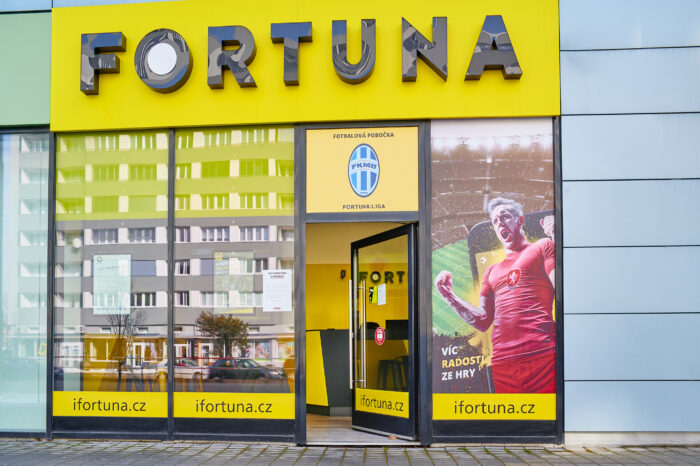
Last year, we closed 400 shops and 600 shops in 2024. We still have 2,000 shops, which gives a very strong retail footprint. But it’s going down and we are proactively pushing as well for more modern retail offering, which have a smaller fixed-cost burden, but equally broader geographical spread.
EGR: There’s been significant tech improvements with new apps and web platforms over the past couple of years – why was this crucial?
DJ: On the product side, we have worked to improve our frontends materially. You compete and win with a better frontend and customer experience. We have made significant progress in that regard over the last two years. After we finished the re-platforming and internalisation by building up our own proprietary tech stack, we have not reduced our 400-plus developers but reallocated a significant portion of them to products and frontends. We’re looking to be the most innovative operator and to invest heavily in exclusive content.
We are heavily investing in AI because technology is key. People perceive us very much as a betting and gaming entertainment provider, which is true. But at the end of the day, we are a digital B2C tech business. We have around 450 people in technology and AI and 150 people in product, which gives huge horsepower to the business.
Over the last two or three years, AI was very much focused on the back office, but now it’s towards the frontend with AI-empowered personalisation. We want each and every FEG employee to have an AI agent for themselves. I want AI to be an implicit part of everybody’s workflow, because this is where the synergy is. We are investing heavily.
EGR: Where would you like the business to be in 12 months’ time under the FEG 2.0 plan?
DJ: I would like us to have a stronger market position in all our existing markets. I would like Fortuna to expand to at least two new markets, and I would like us to continue our product and frontend mission. One of our proof points is the World Cup. We are massively investing in preparing ourselves to have the best, most entertaining, joyful and exciting product for the tournament – and FEG will rock it.
The post Fortuna Entertainment Group CEO: We are determined to become a global player first appeared on EGR Intel.
In his first trade press interview since becoming CEO of Fortuna’s parent company, Dieter John lays out his vision under the ‘FEG 2.0’ strategy, including how AI and M&A will play crucial roles in transforming the multichannel business
The post Fortuna Entertainment Group CEO: We are determined to become a global player first appeared on EGR Intel.